
The story of K-beauty ingredients in 2026 is a story about science moving from the clinic to the counter. The hero actives driving Korean skincare’s growth this year — PDRN, exosomes, advanced peptides, postbiotics — were, until recently, the language of dermatology offices and aesthetic devices. Now they are on shelves at Sephora and Ulta and topping bestseller charts on Amazon and TikTok Shop. For any operator sourcing or stocking Korean skincare, knowing which ingredients are surging is the difference between riding the wave and missing it.
The growth that’s pulling these ingredients in
The demand is not subtle. U.S. K-beauty sales rose 37.2% to $2.0 billion in the 52 weeks ending August 2025, per Circana, led by brands like Anua and Medicube. That sits on top of a record export year for Korea — $11.4 billion in 2025, with basic skincare alone accounting for $8.5 billion. The United States is now Korea’s single largest cosmetics market, and Olive Young, Korea’s biggest beauty retailer, is entering the U.S. directly in 2026. The channel is widening exactly as these new actives mature.
PDRN: the breakout active
If one ingredient defines 2026, it is PDRN — polydeoxyribonucleotide, often sourced from salmon DNA. Trend tracker Spate has flagged #PDRN as the top-rated ingredient hashtag on TikTok, with mentions up more than 1,000% year over year. It has jumped from injectable “salmon DNA” treatments in clinics to affordable topical serums: Medicube’s PDRN Pink Peptide Serum is an Amazon bestseller under $25 with thousands of five-star reviews, and PDRN now has its own space in Sephora’s K-beauty sets. The appeal is a regenerative, barrier-supporting story at a mass price.
The actives defining the year
PDRN leads, but it travels in company. The ingredients gaining the most traction in Korean formulations entering Western markets break into a few clear groups:
- Regenerative biotech actives. PDRN and polynucleotides for repair; exosomes for remodeling. Forecasters note the strongest 2026 products pair the two rather than relying on a single hero.
- Advanced peptides. Biomimetic and multi-peptide complexes that signal rather than just hydrate — increasingly blended with PDRN.
- Barrier and microbiome support. Ceramides, postbiotics, fermented actives, niacinamide, and squalane — the durable backbone of “glass skin” and sensitive-skin care.
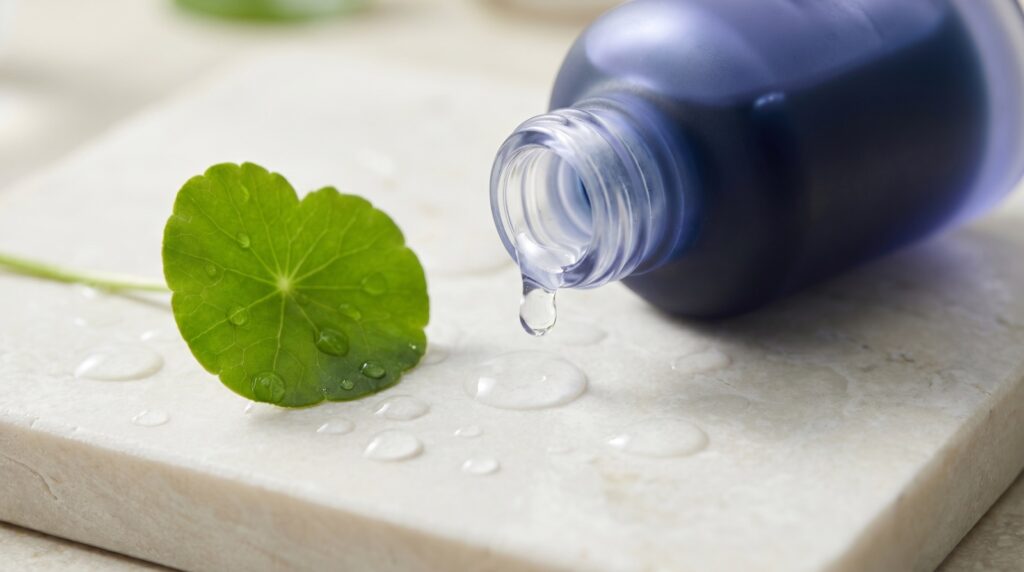
- Cica and centella. Madecassoside and centella-derived actives remain a K-beauty signature; clinical work on centella-derived exosomes has shown measurable reductions in pore area and surface roughness.
Barrier-first beats anti-aging
The throughline across all of it is the skin barrier. The conversation has shifted from aggressive correction toward repair and resilience — and the market is rewarding it. COSRX’s Advanced Snail 96 Mucin Power Essence remains a global barrier-repair bestseller, and Beauty of Joseon and Anua have grown fast in Western markets on the same premise. Meanwhile, several once-loud trends are cooling: slugging, beef tallow, aggressive over-exfoliation, the rigid 10-step routine, and fear-based “clean” claims are all losing momentum. Operators stocking for 2026 should weight toward barrier and microbiome, not harsh actives.
Why affordable actives are winning the wallet
There is a pricing dimension worth understanding. In the first nine months of 2025, masstige skincare grew 14% — far outpacing both mass and prestige — and a majority of U.S. consumers now say they have used and prefer “dupes.” Clinic-grade actives delivered at accessible prices is precisely the K-beauty value proposition, which is why a $25 PDRN serum can outsell products many times its price.
What this means for sourcing
For a U.S. or India operator, the takeaway is that ingredient knowledge is now a sourcing advantage. The brands worth representing are the ones formulating around these regenerative and barrier-first actives with real substantiation — not the ones chasing yesterday’s trend. And because these are bioactive, clinic-adjacent ingredients, regulatory and safety substantiation matter more than ever when bringing them into a new market.
The operator’s view
The actives that defined dermatology a few years ago are defining retail shelves today, and the pace of that hand-off is the real 2026 trend. At Luxmetics, we vet Korean brands before we represent them — including how their formulations are built and substantiated — and handle the sourcing, compliance, and logistics to bring them into U.S. and Indian channels. If you want a skincare line built on where the science is going rather than where the hype has been, that is the work we do.