
A client is checking in for a facial. While the esthetician confirms the intake form, the client mentions, without much emphasis, that they have rosacea and asks whether the green box on the shelf is the one for that. The esthetician has one sentence to choose. They can say yes, which is a diagnosis and a treatment claim in a single syllable. They can say no, which is untrue in a different way, because the box is labeled Calming and lists azelaic acid. Or they can say the third thing, which takes practice and is the subject of this article.
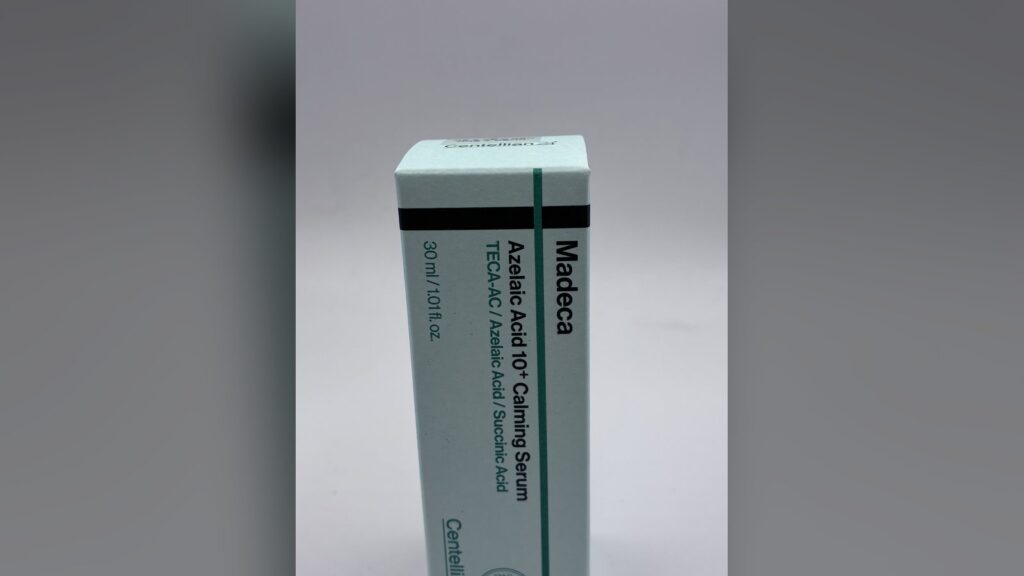
The green box is the Madeca Azelaic Acid 10+ Calming Serum. Beside it in the same shipment sits the Madeca Vitamin 15+ Glowing Serum in pale yellow. Same brand, same 30 ml size, two different client conversations, and under one of them a regulatory line a spa team needs to know is there. An azelaic acid serum is the product on this shelf most likely to invite the wrong sentence.
Two boxes, two vocabularies
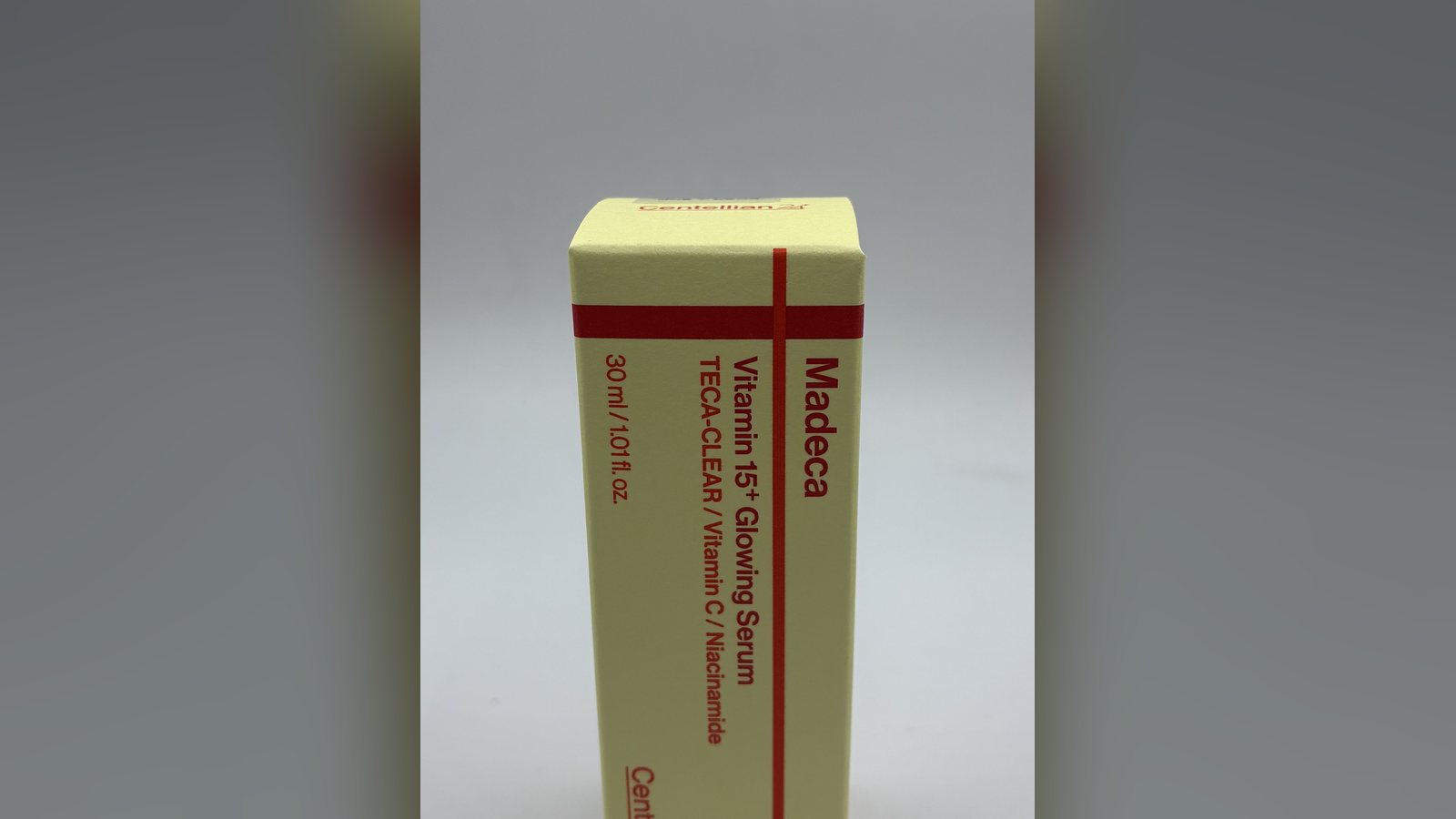
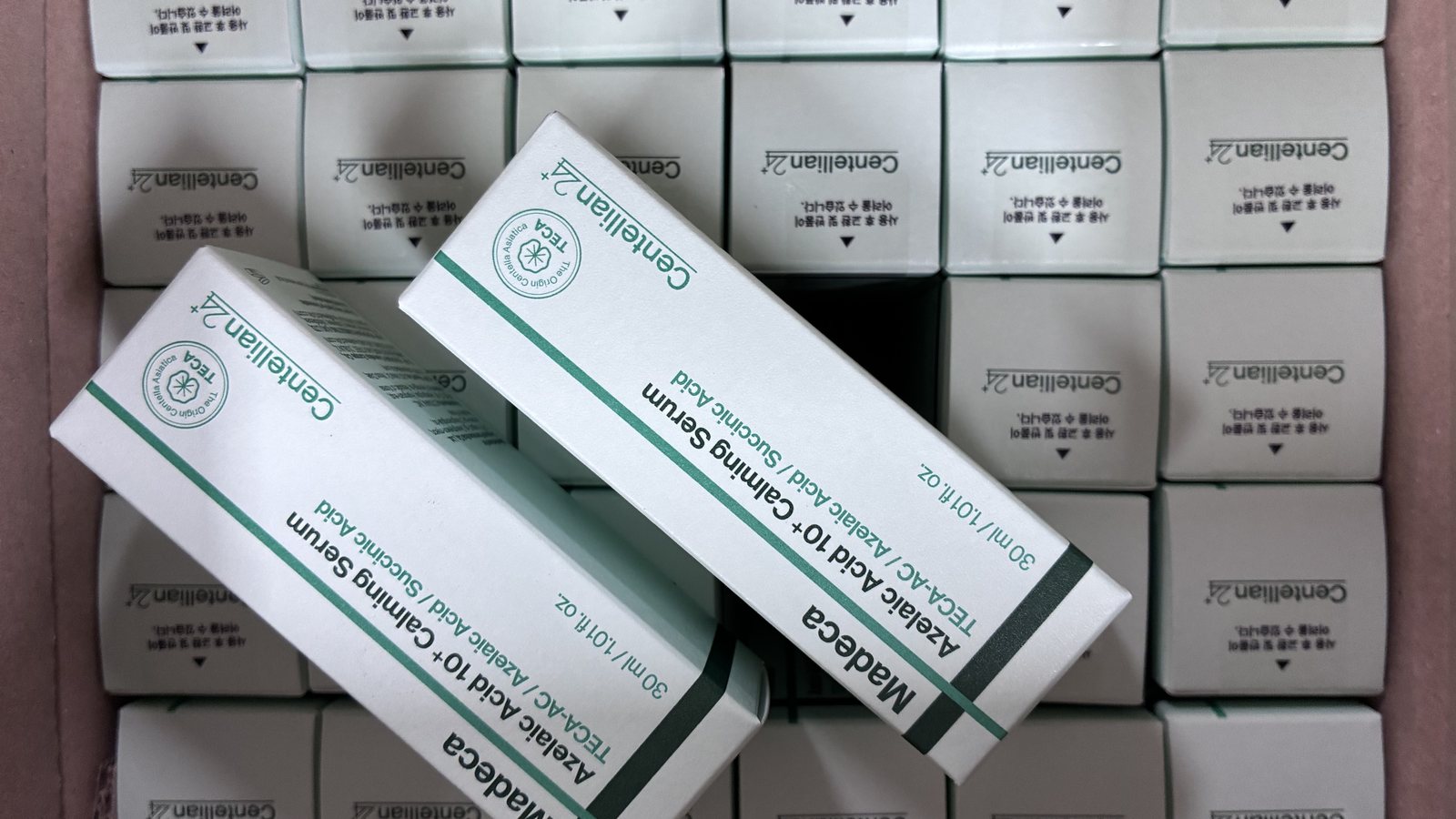
The azelaic acid serum comes in a pale mint box with a dark green band and carries “The Origin Centella Asiatica TECA” seal. Its listed ingredient story is TECA-AC, Azelaic Acid and Succinic Acid, and its printed word is Calming. The vitamin serum comes in a pale yellow box with a red band. Its story is TECA-CLEAR, Vitamin C and Niacinamide, and its printed word is Glowing.
Those two words describe two different clients. One arrives concerned about how their skin looks right now, usually redness or unevenness, and wants it to look quieter. The other arrives with a wish rather than a concern and wants it to look brighter. Both are appearance conversations, and appearance is exactly the register a cosmetic is allowed to occupy.
The line under the azelaic acid serum in the US
In the United States, azelaic acid products at or under roughly 10 percent are sold as cosmetics. At 15 and 20 percent, azelaic acid is a prescription drug, sold as Finacea and its generics and approved for rosacea and acne. The same molecule sits on both sides of the line, and the side it sits on determines what may be said about it. A cosmetic may not make disease or treatment claims; a prescription product is described by its approved labeling and prescribed by a physician.
A note on the box: “10+” is part of the product’s printed name. We are not stating the concentration of the formula here, and neither should a shelf card. The number is a name until a specification sheet says otherwise.
The azelaic acid thresholds are stated here in general terms only, and this is not legal advice. Have qualified counsel confirm the classification and the permitted claims for any product before it reaches your shelf.
The third sentence
Back to the front desk. The client has said rosacea. The esthetician’s job is to hold three things at once: not to diagnose, not to claim, and not to dismiss. The sentence that does all three sounds something like this. “Rosacea is something to keep working through with your physician. This serum is a cosmetic; the box calls it Calming and it lists azelaic acid and succinic acid. I can tell you how it feels and how clients use it, and if you want to check it against what your doctor has you on, we can do that first.”
Every clause is either a printed fact, an appearance word as printed, or a referral. None of it says the serum is for rosacea, treats redness or reduces inflammation, and none of it turns the client away. Our post on esthetician scope of practice covers where the professional line sits in more detail; this is the retail-side version of the same discipline.
The vitamin C conversation and its own quiet trap
The Glowing serum is the easier sale and it still has a boundary. Vitamin C and niacinamide are ingredients a client has often read about, and the temptation is to complete their sentence for them: fades dark spots, evens tone, treats hyperpigmentation. Those are treatment claims wearing a skincare vocabulary. The box says Glowing. The team says Glowing, names the ingredients, and describes texture and where it fits in a routine. Brightness is an appearance; a condition is a diagnosis, and the line between them is the same line that runs under the green box.
The same caution applies to the number on this box. “15+” is printed as part of the name, and a team that reads it as a percentage is stating something the carton does not.
Writing it down before the client arrives
The sentence at the front desk works only when it has been written down first: on a training card, said out loud in a team meeting, and mirrored on the shelf card and the service menu so the client reads and hears the same words. For these two serums the card is short. Product name as printed, size (30 ml / 1.01 fl. oz.), the ingredient names as listed, the one appearance word the box uses, and the referral line for anyone who names a condition.
The card exists so that the third sentence is the only one available. A team that has rehearsed it does not reach for yes or no when a client says rosacea, and a shelf card that matches it means the client is never told one thing in print and another out loud.
Two serums, one intake sheet
Luxmetics sources both serums, helps you decide whether one or both belong in your case, and reviews each pack and its claims before it ships, which includes checking that the claim vocabulary on your menu and shelf cards does not exceed the words on the box. Freight follows. An azelaic acid serum is a demanding product to describe, and the description is part of what we deliver.