
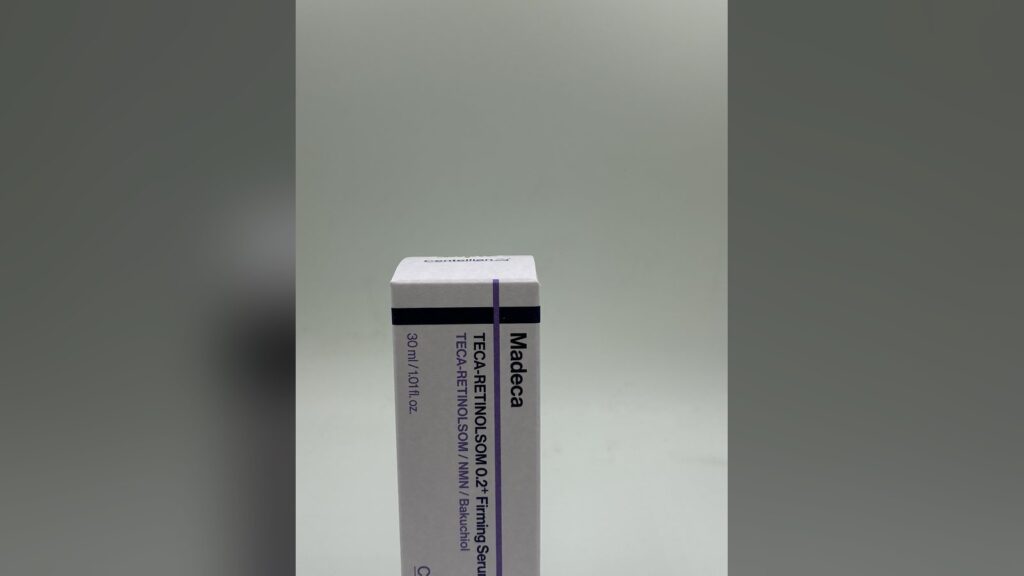
The smallest type on the violet-banded box is the part worth reading first. Madeca TECA-RETINOLSOM 0.2+ Firming Serum: three ingredient names, one number, one adjective, and 30 ml / 1.01 fl. oz. underneath. The number is the one a buyer’s eye lands on, and it is the one that tells a buyer least. A figure printed beside the word retinol is a label the brand chose for its format. It is not a dosing schedule, not a comparison against another brand’s figure, and not a forecast of what a client’s skin will do by the eighth week. Reading that number for what it is, and no more, is the first job of anyone putting an encapsulated retinol serum on a spa retail shelf.
The rest of this article works through the box in the order a client would ask about it: the format, the second and third names on the line, the client who already holds a prescription, and the two pieces of counsel every retinol conversation ends with.
What the figure on the box does and does not tell you
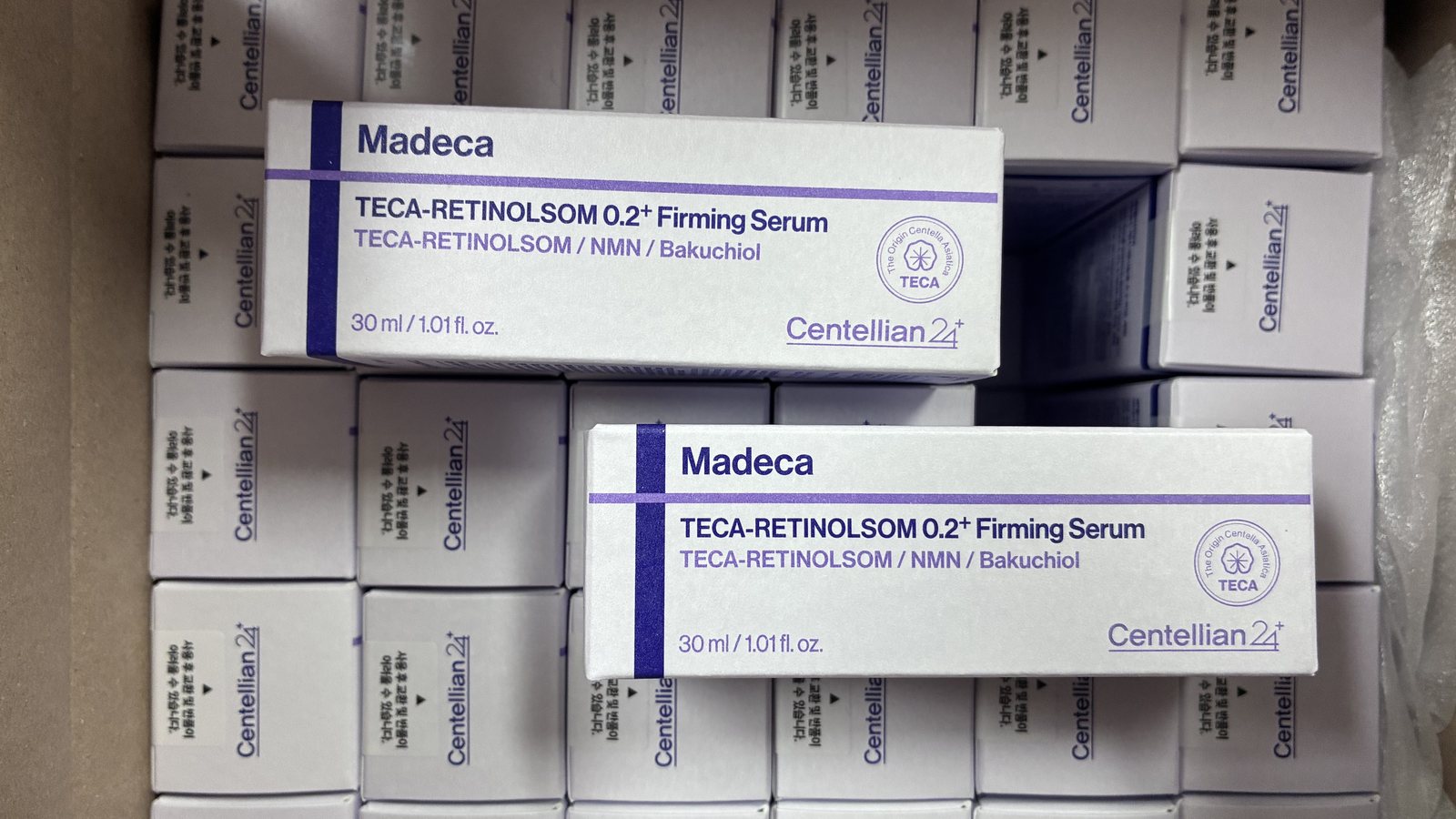
Brands print retinol figures in different ways, and the printing conventions are not standardized across the category. One brand’s number may describe the raw material as supplied, another’s the retinol content of a complex, another’s a marketing tier. The box in front of us reads 0.2+ and nothing more, so we read nothing more into it. What the box does tell us, verbatim, is the three-part ingredient line: TECA-RETINOLSOM / NMN / Bakuchiol. TECA is Dongkook Pharmaceutical’s titrated extract of centella asiatica, a standardized extraction that guarantees a set concentration of three triterpenes, and it appears on every Centellian24 box in this shipment. RETINOLSOM is the brand’s coined name for the retinol component. The hyphen between them is the whole formulation story in one character: the centella heritage and the retinol, presented as one complex.
Two retinol serums with different figures cannot be ranked against each other from the box alone, and a team that tells a client one is “stronger” because its number is larger has said something the packaging does not support.
What an encapsulated retinol serum is built to do
Retinol is a molecule that degrades when exposed to light and air, and it has a reputation among consumers for a rough first month. Encapsulation and complexing are the formulation answers to both problems, described here in general terms. In an encapsulated retinol serum the retinol is bound into a carrier, or paired with stabilizing partners, so that less of it is lost between the factory and the bathroom, and so that it meets the skin in a more gradual way once applied rather than all at once.
The intended benefit is tolerability. The reasoning is that a slower introduction gives a first-time user a gentler start, and that reasoning is the most a spa team should say about it. How any given client responds is not something a box, or a front desk, can promise. What the format does change is the shape of the conversation. A team can talk about why a brand built the product the way it did, which is a story clients find useful, without stepping into results.
Why bakuchiol shares the line
Bakuchiol is the third name on the box. It is a plant-derived ingredient, extracted from the seeds of the babchi plant, and it has spent the last several years being marketed across the category as either a retinol alternative or a retinol companion. On this box it is a companion. The pairing is common in Korean formulation right now, and the logic a brand typically gives for it is positioning: a retinol product that also carries a botanical the client has heard described as gentle. We repeat that as the brand’s positioning, not as an outcome.
NMN sits between the two. The box gives us the initials and nothing about the role, so the team says the initials and nothing about the role.
The client already using a prescription retinoid
Intake should include one question: are you currently using a prescription retinoid such as tretinoin? If the answer is yes, the conversation about this serum ends, politely, at the desk. The team does not suggest adding it, swapping it in, alternating nights, or taking a break from the prescription. The client is directed to the prescriber, and the note goes in the client file so the next esthetician does not restart the conversation.
The reason is regulatory as well as clinical. Retinol topicals at cosmetic concentrations are sold in the United States as cosmetics. Tretinoin and other retinoid drugs are prescription medicines. A spa that advises a client on how to combine the two has moved from retail into the prescriber’s territory, and a spa team is not licensed to be there. The paragraph above is general information rather than legal advice. The classification of a specific product, and what a licensed team may say about it, belongs with qualified counsel and your state board.
Evening use, daily sun protection, and one printed word
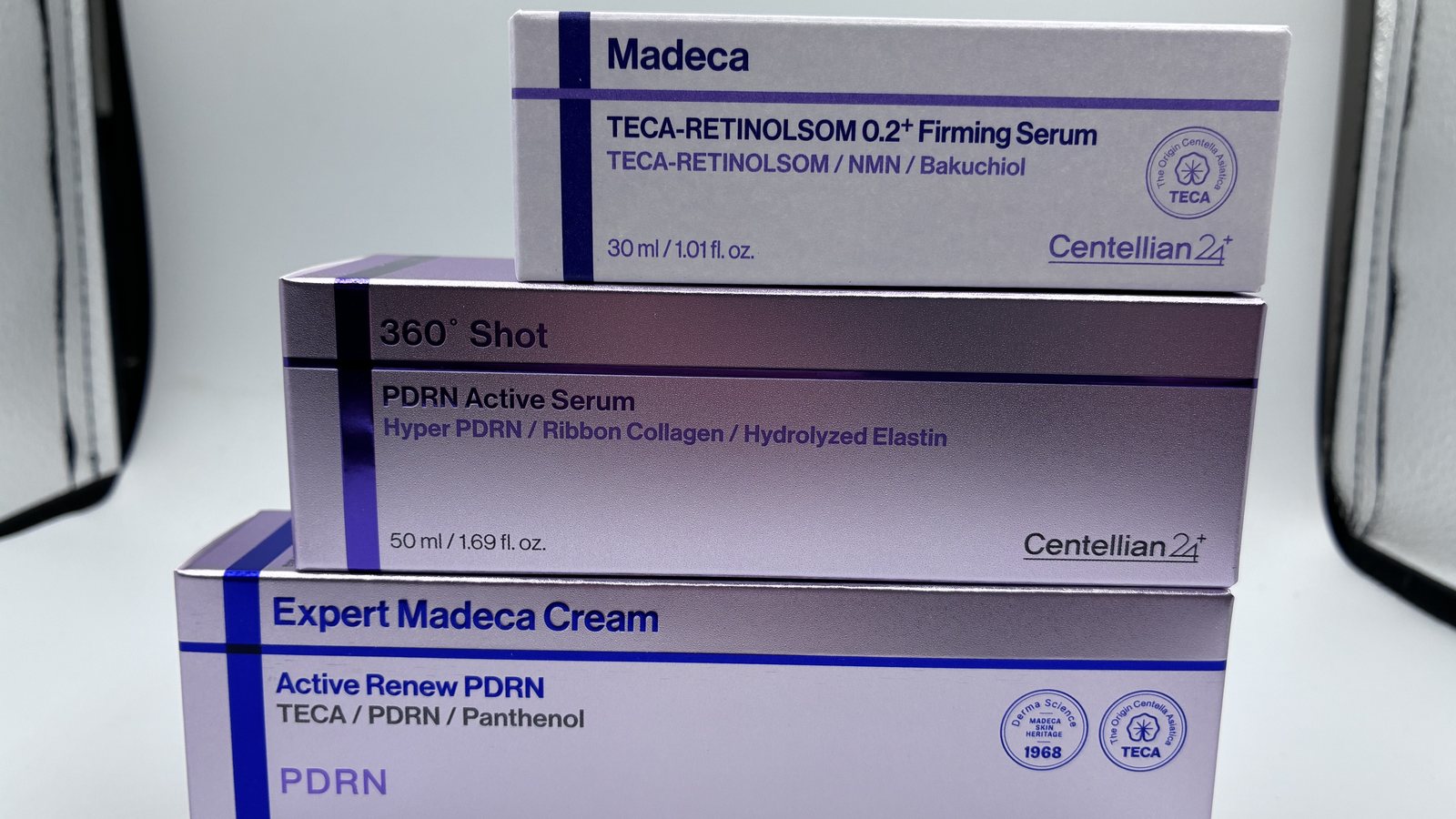
Two pieces of counsel travel with every retinol product regardless of brand, and both are on the box in spirit if not in ink. The first is evening application, which follows from the light sensitivity described above. The second is daily sun protection. The same brand ships a Broad Spectrum SPF 45 sun essence in this shipment, labeled with US OTC vocabulary, and a shelf that pairs the two gives the team a natural sentence: this one at night, that one in the morning.
The last word on the box is Firming. It is an appearance claim, chosen and printed by the brand, and it is the only claim word on the pack. The team may say the box reads Firming. The team may not turn that adjective into a verb about the client’s skin, and may not reach for the medical vocabulary that a client, or a regulator, would hear as a treatment claim. The gap between those two sentences is where most retail compliance problems in this category begin, and closing it is a training matter before it is a legal one.
What travels with the carton
On an encapsulated retinol serum, Luxmetics sources the product, takes the pack through labeling and compliance review ahead of shipping, and writes a one-page team sheet that carries the box copy, the intake question, and the two pieces of counsel above in the words the team may use. Sourcing, SKU selection, labeling review, freight and training arrive together, so the serum and the sentences about it reach the shelf at the same time.