
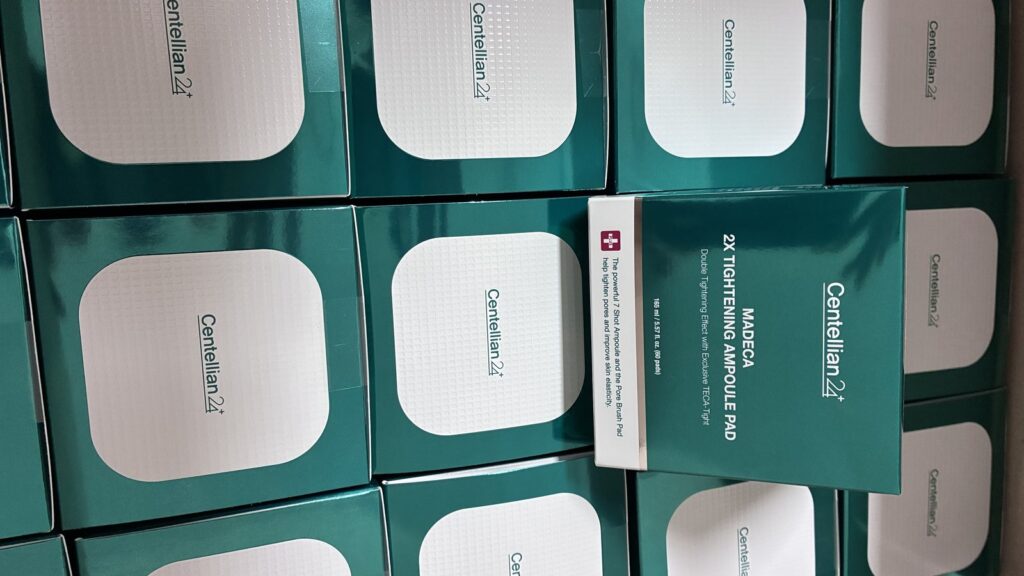
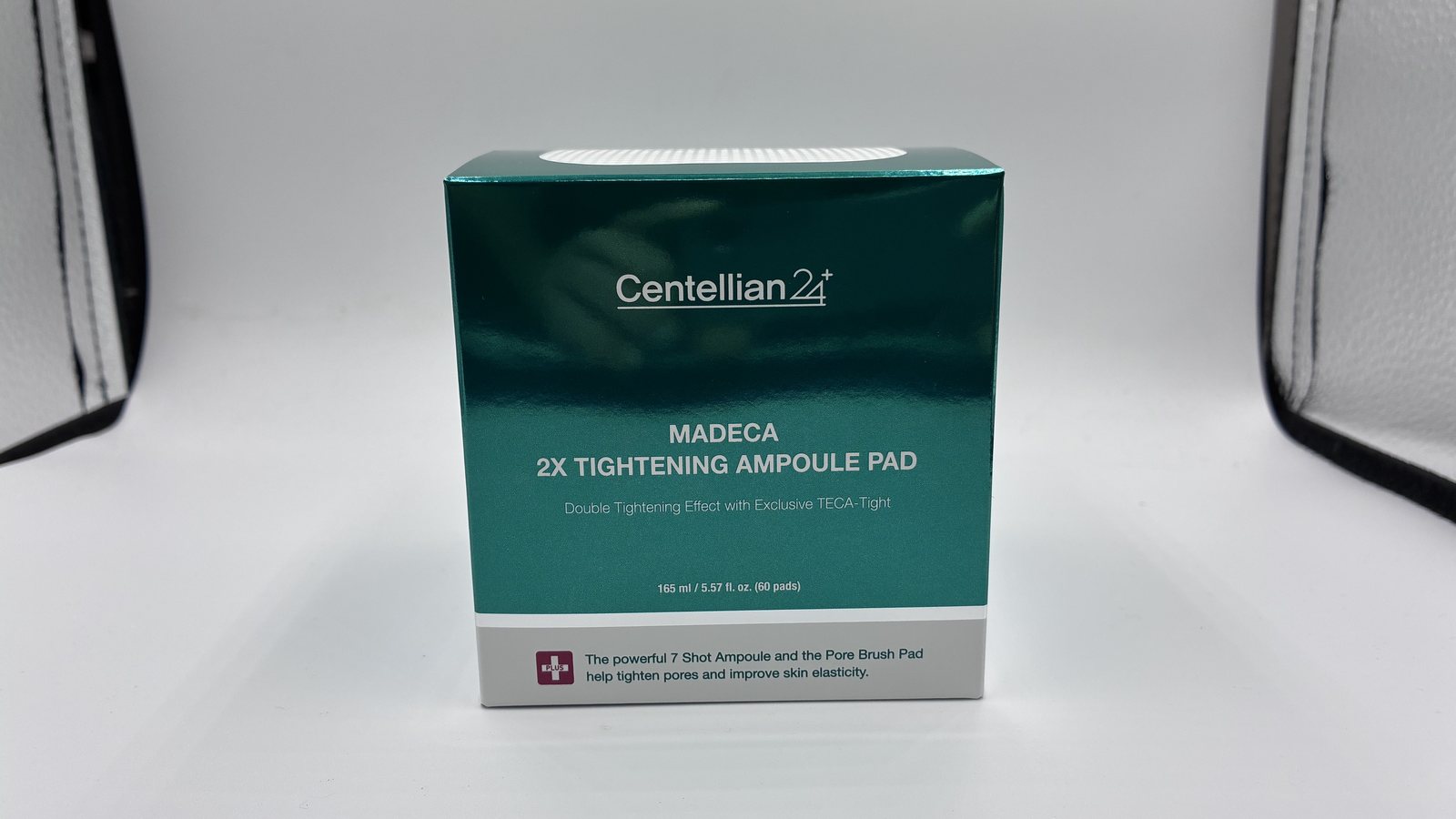
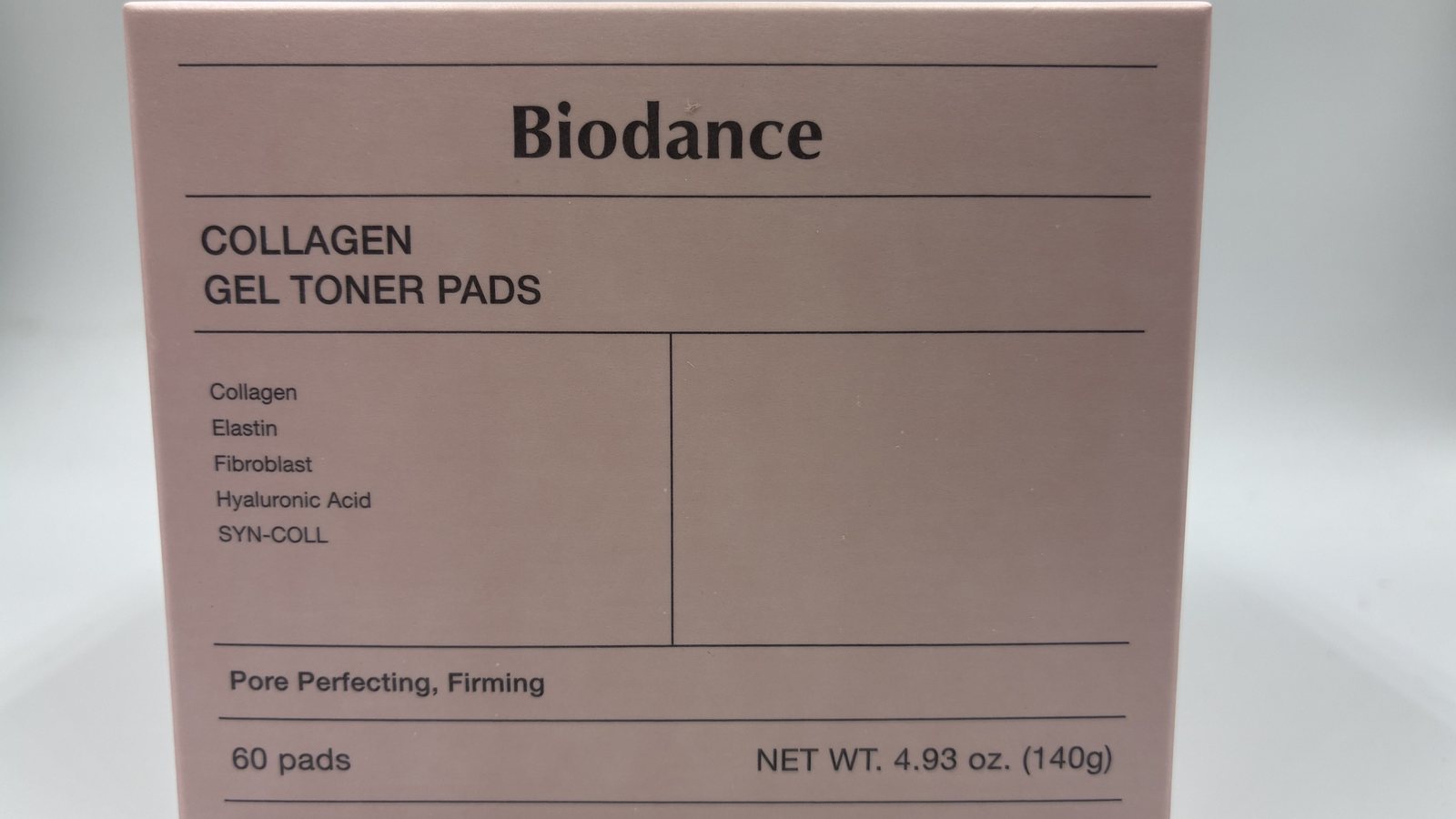
Sixty appears twice in this shipment, on two boxes from two brands that were never designed to sit together. The Madeca 2X Tightening Ampoule Pad from Centellian24 declares 165 ml / 5.57 fl. oz. and 60 pads. The Biodance Collagen Gel Toner Pads declare NET WT. 4.93 oz (140 g) and 60 pads. One brand measures its jar by liquid volume, the other by net weight, and the count is the only figure the two boxes agree on. That agreement is the useful part. Skincare pads are sold by the piece, and a piece is something a spa can put on a calendar.
This article is about the format rather than either formula: why pads move so easily from a treatment table to a client’s bathroom, how a sixty-count jar becomes a cadence, and why a spa that carries pads needs two jars of the same product and must never let them become one.
Volume, weight, and the number both boxes share
The two declarations are not a discrepancy. A brand may declare a pad product by the liquid it carries or by the total net weight of the soaked pads, and both appear here in the dual US customary and metric form a US shelf expects. What the volume or weight tells an operator is how wet the pad will be and how long the jar will stay that way once opened. What the count tells an operator is how many times a client will reach for it. The second number runs the business.
The Madeca box carries “Double Tightening Effect with Exclusive TECA-Tight” and an embossed pad texture on the lid. The Biodance box lists Collagen / Elastin / Fibroblast / Hyaluronic Acid / SYN-COLL and reads “Pore Perfecting, Firming”. Tightening, Pore Perfecting and Firming are the words the brands printed. A team repeats them as printed and stops there.
Why skincare pads leave the treatment room so easily
Three properties make the pad the most portable format on the back bar. The first is hygiene. A pad is lifted once, used once and discarded, so no hand returns to a jar shared between clients, and the esthetician can show the client the fresh pad before it touches skin. The second is dose control. Each pad arrives carrying its own measure, so the step delivers the same amount at the end of a long day as at the start of it, without a pump count or a pour. The third is visibility. A pad is a step the client can see, name and remember, which is not true of a serum dispensed behind their head.
Those three properties are also the properties of a daily bathroom ritual. The client at home wants a step that is clean, measured and visible, and they want it to look like the one they saw on the table. Skincare pads carry the treatment room into the bathroom with almost no translation, and that is why the format converts from service to retail more readily than most.
A sixty-count jar as a cadence
Sixty divides two ways. At one pad a day the jar is a two-month calendar; at two pads a day it is a one-month calendar. The spa sets the cadence at the consultation, writes it on the receipt, and the jar becomes a reorder clock the client can read by looking into it. A front desk that knows the cadence can send a reorder note a week before the jar runs out rather than a month after.
The cadence is a retail rhythm, not a treatment protocol. The team describes how many pads and when, in line with the brand’s own directions, and does not attach the schedule to a result. A client who asks what the pads will do is read the box: Tightening on one, Pore Perfecting and Firming on the other, and nothing beyond those words.
The two-jar rule
A spa that uses pads in service and sells pads at retail owns two kinds of inventory that happen to look identical. The treatment-room jar is opened, used across clients, and is a cost of delivering the service. The retail jar is sealed, sold to one client, and is margin. The rule is that these are never the same jar, for three reasons.
- Hygiene and trust. A retail jar goes home with its seal intact. A jar that has been opened on the back bar cannot be sold, and a client who suspects otherwise will not return.
- Inventory arithmetic. Back-bar consumption and retail sales are two different numbers with two different owners. Pulling a retail jar to finish a service erases both.
- Reorder signal. The retail count tells you what clients want; the back-bar count tells you what the menu uses. Mixed, neither tells you anything.
In practice this means marked back-bar jars stored away from the shelf, counted weekly on their own line, and a retail facing that is only ever touched by a purchase. It also means ordering the two quantities as two lines on the purchase order, because a sourcing partner who sees one line will ship one pile.
What the format asks of the shelf
A pad jar is tall, opaque, and designed to be recognized on a bathroom counter, which makes it an easy retail facing. The deep green Madeca box and the dusty pink Biodance box read from across a room. Place them where the client walks after the service, not where they pay, and let the esthetician’s last sentence in the room match the first sentence at the shelf. The count on the box does the rest of the talking.
Two lines on one order
For skincare pads, Luxmetics sources both brands in one consolidated shipment, writes back-bar and retail quantities as separate lines, checks each pack and its printed claims before shipment, arranges the freight, and hands over a team card carrying the printed claim words and the cadence language. The jar arrives with its two roles already separated.