
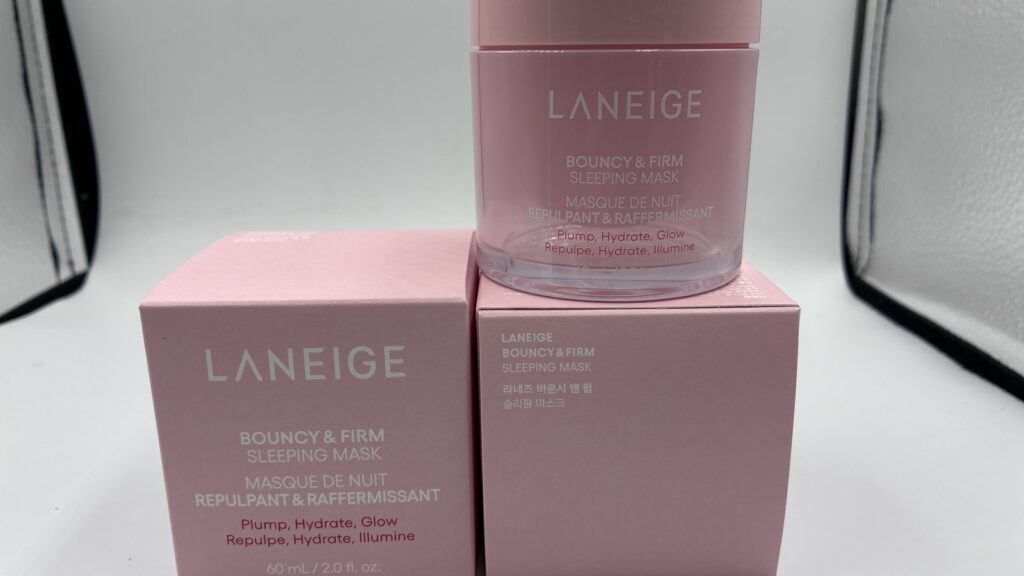
Repulpe, Hydrate, Illumine. The French runs across the front of the Laneige Bouncy & Firm Sleeping Mask box beneath the English “Plump, Hydrate, Glow”, and no one at a med-spa in Scottsdale will ever read it aloud to a client. It was printed for a reader in another country. That is exactly why it deserves a US buyer’s attention. Bilingual cosmetic packaging is a record of where a pack was printed to be sold, and in this one shipment a single brand’s product family arrived carrying three different records.
Three pack routes in one carton
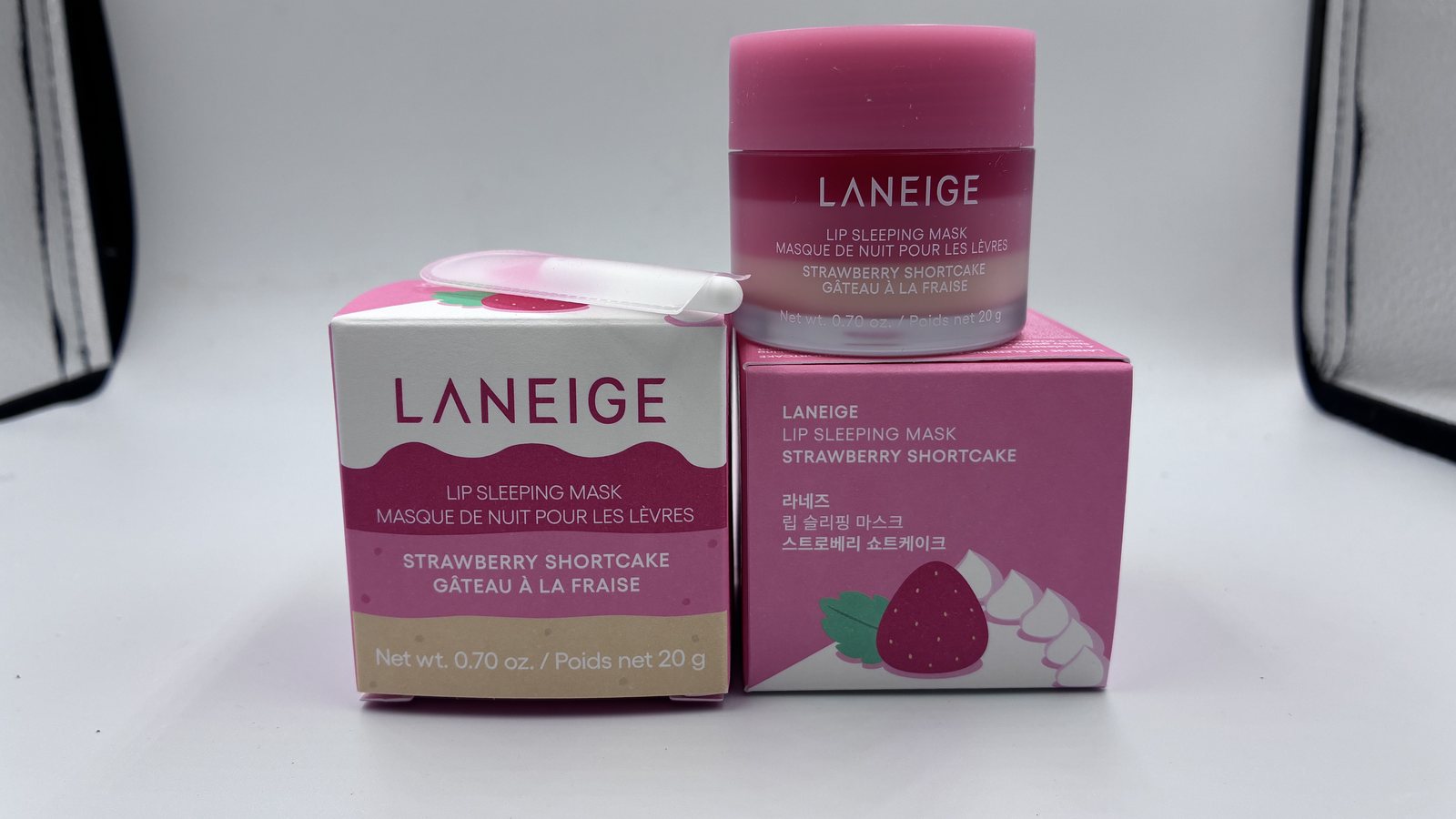
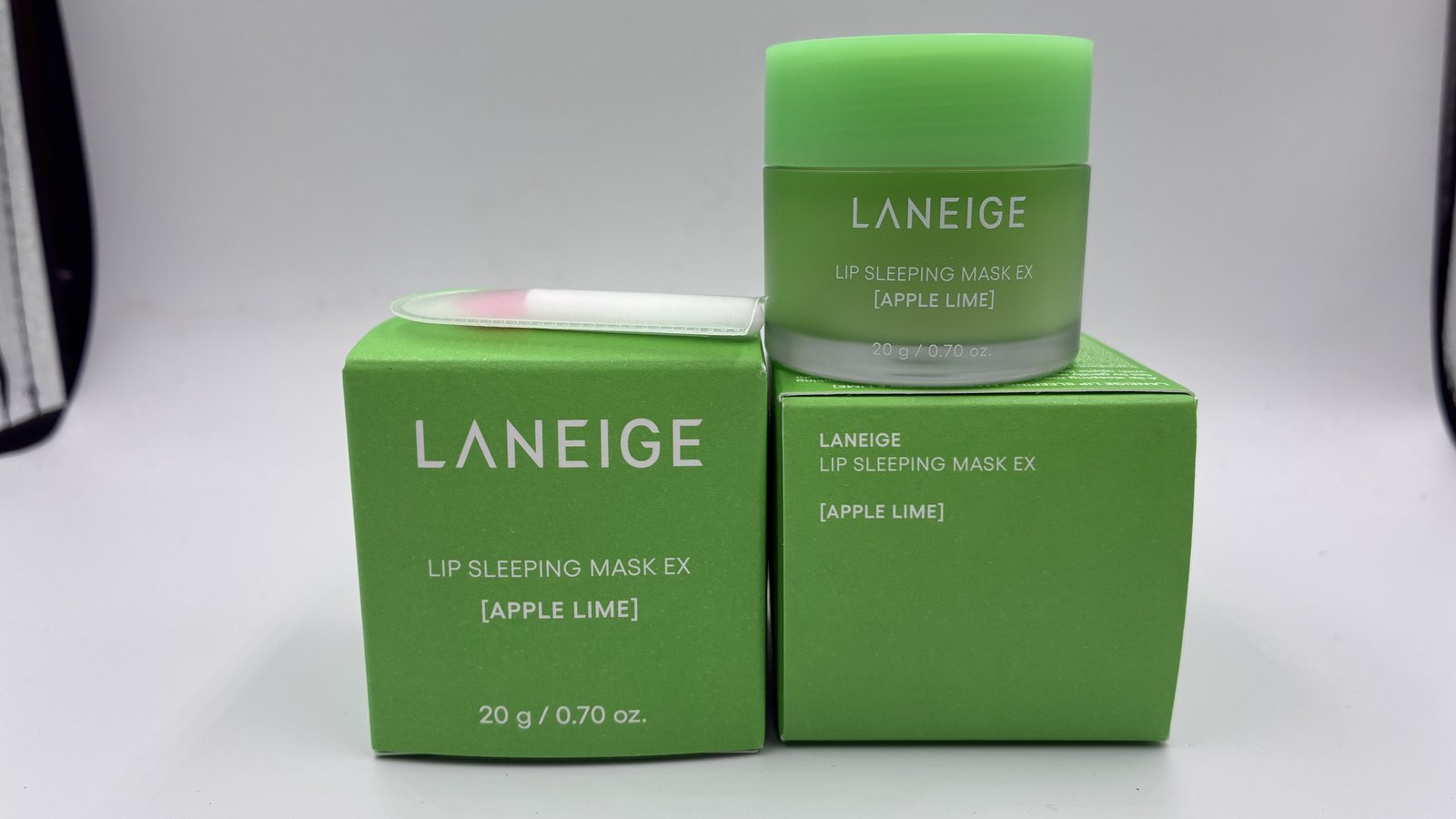
Five Laneige SKUs came in. Two lip masks, Berry and Apple Lime, carry the EX suffix and English-only fronts, declaring 20 g / 0.70 oz. Two more, Strawberry Shortcake / Gâteau à la Fraise and Sweet Candy / Bonbon Gourmand, carry bilingual EN/FR fronts with the declaration written as Net wt 0.70 oz / Poids net 20 g. The fifth, the Bouncy & Firm Sleeping Mask, is trilingual: English, French and a Korean line, 라네즈 바운시 앤 펌 슬리핑 마스크, on the same face. Same brand, same sleeping mask family, three printing decisions.
None of the three is a mistake and none of the three is, by itself, a US pack. Each is evidence of the market a print run was prepared for, and a buyer who can read that evidence knows what to check before the carton is opened on a shelf. The reading takes a minute at the intake table and saves a conversation with a regulator later.
What bilingual cosmetic packaging generally signals
An EN/FR front with the net quantity given in ounces first and grams second, and the French phrase Poids net beside Net wt, is the signature of a pack printed for a North American retail route that has to satisfy Canada’s bilingual labeling requirement. Canadian rules generally require mandatory label information in both English and French, so a brand selling through a retailer with stores on both sides of the border prints one pack that can sit in Toronto and in Buffalo. The ounces-first order tells you the primary reader was expected to think in US customary units; the French tells you the pack was also expected to cross a border.
Bilingual cosmetic packaging is a useful signal about the route, and it is no more than that. A bilingual pack has been prepared for a neighbor’s rules, and a neighbor’s rules are not the FDA’s. Treat this as general information on how packs are typically prepared, not legal advice; whether a given label meets Canadian or US requirements is a question for qualified counsel.
What the Korean line signals
The Korean text on the Bouncy & Firm box tells a different story. A pack that carries Korean alongside English and French was printed to serve the brand’s home market as well as export, which usually means a consolidated print run rather than separate packaging for each destination. The Korean line does not make the pack less legitimate for a US shelf, and it does not make it more compliant either. It means the brand chose to serve several markets from one box, and that every one of those markets’ requirements had to fit on the same panels.
The EX suffix on the English-only lip masks is the third signal, and the least readable. It is a variant designation the brand uses on this pack route. The box does not say what it stands for and we do not guess. An English-only front is not evidence of a US pack either; English is the export default for Korean brands, and a pack with no French on it may have been printed for any English-reading market.
Why the print route never settles the US question
Whatever market a pack was printed for, the US buyer’s obligations are the same. The label offered for sale in the United States has to meet FDA cosmetic labeling requirements, which cover the identity of the product, the net quantity of contents, the ingredient declaration, and the name and place of business of the manufacturer, packer or distributor. Since MoCRA, the label also has to carry the responsible-person line. A Canadian-route pack may satisfy some of that and miss some of it. A trilingual home-market pack may do the same. The only way to know is to check the panel, and the checking is a labeling intake task, not a purchasing one.
We have covered MoCRA registration, listing and border screening in earlier posts, linked below, and will not re-explain them here. The single point for this article is that the language set on the front is a clue about where to look, never a substitute for looking. None of the above is legal advice, only general information; labeling compliance for a specific product needs confirmation from qualified counsel before sale.
Reading the languages at the intake table
The check below takes less time than unpacking the carton, and it is done once per variant, not once per brand.
- Photograph every front and back panel of every variant before freight, and file them by lot.
- Record the language set per SKU: English-only, EN/FR, EN/FR/KR. It becomes part of the product record.
- Check the net quantity declaration, the ingredient list and the business name and address against US requirements, whichever market printed them.
- Confirm the responsible-person line MoCRA expects is present and correct.
- Decide, per variant, which pack route you want to reorder, so a shelf facing does not mix routes without a reason.
Where the language check sits in our process
Luxmetics photographs packs in Korea before the freight is booked, records the pack route for every SKU, runs each label through compliance intake against US cosmetic labeling requirements and the MoCRA responsible-person line, advises which pack version to order for a US shelf, and arranges the freight. Bilingual cosmetic packaging is read as a clue, then checked as a label.
Ordering a Korean line for a US shelf? Luxmetics reviews every SKU for packaging artwork, claims, and country of origin against current US rules before it ships, and flags what needs relabeling. See how our compliance audit works.