
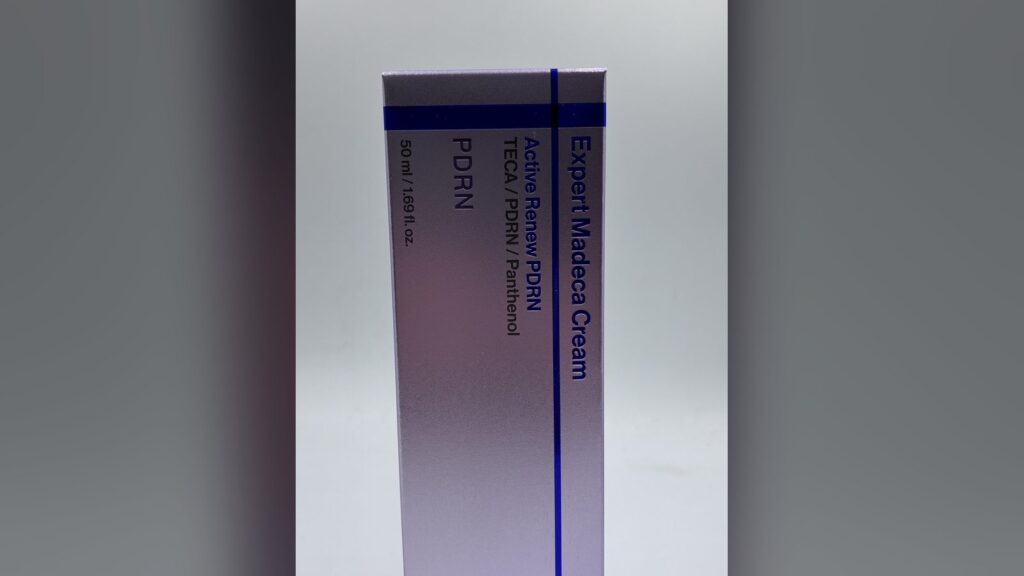
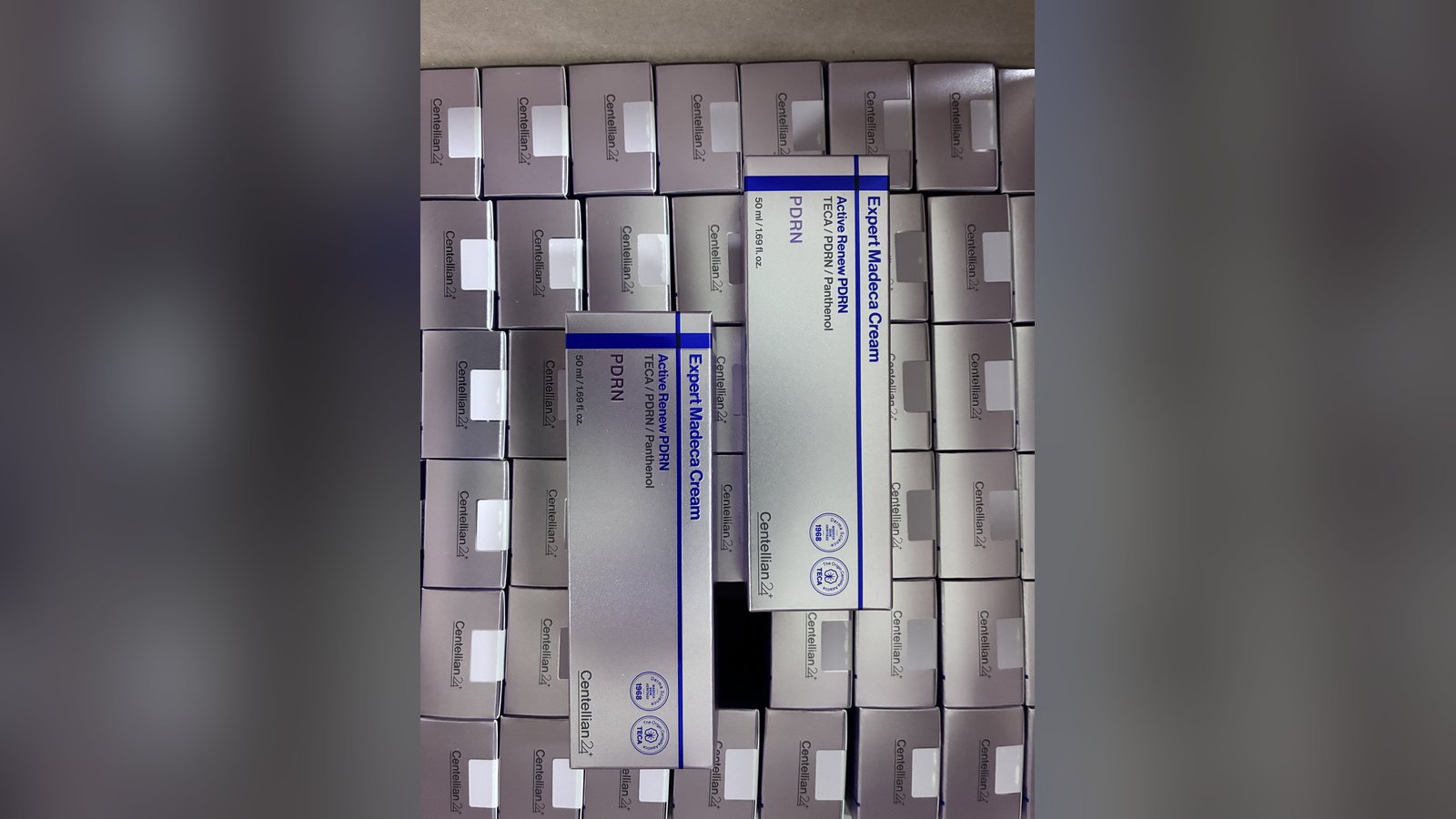
The Expert Madeca Cream box carries two seals. One reads “Derma Science MADECA SKIN HERITAGE 1968”. The other reads “The Origin Centella Asiatica TECA”. They sit on the same 50 ml carton and they are doing two different jobs. The first is a date claim: the company behind this cream has existed since 1968. The second is a raw-material claim: the centella in it is a specific, standardized extract with a name. Neither seal says the cream does anything, and that restraint is the most instructive thing on the box.
Centellian24 is the derma-cosmetic brand of Dongkook Pharmaceutical, and eight of its SKUs arrived in the shipment we photographed on September 7. This piece is about what a pharmaceutical parent means once the boxes are on a spa shelf, and about the discipline it asks of the team standing next to them.
1968 is the company’s date, not the cream’s
Dongkook Pharmaceutical was founded in 1968. Its best-known product is Madecassol, a centella-asiatica-based ointment sold in Korean hospitals and pharmacies for decades; trade coverage has described it as Korea’s best-selling ointment for over 50 years. The skincare brand is much younger. Centellian24 launched as a consumer skincare brand in 2017, and the brand reports more than 89 million units of Madeca Cream sold in Korea since then.
So the seal is doing something precise. It borrows the parent’s date, not the product’s. A US operator should read it that way and repeat it that way: the manufacturer has a 1968 founding date and a long pharmacy history with centella. The cream in the box has a 2017 brand behind it and a cosmetic label on it.
What TECA actually names
TECA stands for Titrated Extract of Centella Asiatica. It is a standardized extraction that guarantees a set concentration of three centella triterpenes: madecassoside, asiaticoside and asiatic acid. Standardization is a pharmaceutical habit. A pharmacy cannot sell an ointment whose active content drifts from batch to batch, so the extract is titrated to a specification, and that specification has traveled into the cosmetics line as a named ingredient.
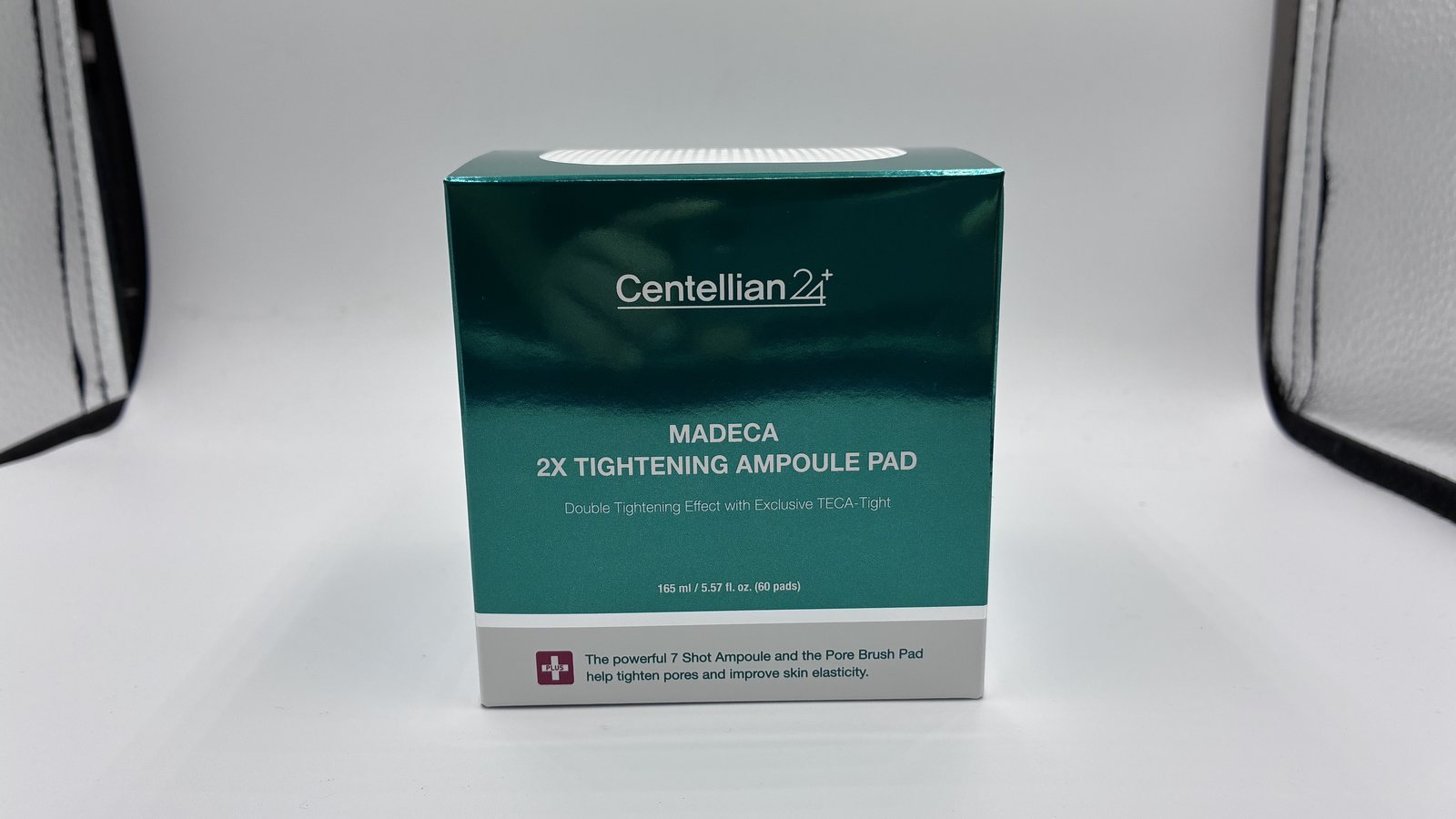
You can watch the platform move across the eight boxes. The ampoule pad names “Exclusive TECA-Tight”. The azelaic serum lists TECA-AC. The vitamin serum lists TECA-CLEAR. The retinol serum lists TECA-RETINOLSOM. The cream and the sun essence list TECA plainly. One extract, one supplier lineage, a variant name per product. For a buyer that is a signal about consistency of input across a line, and consistency matters more when the line will be dispensed in a treatment room than when it sits in a drugstore.
Why the Centellian24 derma label lands differently in a treatment room
A department store shelf sells a brand story to a browsing customer. A med-spa retail case sells to a client who has just spent forty minutes with a professional, in a room with a treatment bed in it. That client is already in a clinical frame of mind, and a brand whose parent has sold an ointment in hospitals for fifty years is legible to them in a way a lifestyle brand is not.
The eight formats reinforce this. Pads, a sun essence, four 30 ml serums and ampoules, a 50 ml serum and a 50 ml cream: every one is something a professional can hold up and talk about. The pharma parentage gives the esthetician a true, checkable sentence to open with. The formats give them something to hand over.
The discipline: a heritage is not a claim
This is where the seal becomes a responsibility. Madecassol is a drug product in Korea. Expert Madeca Cream is a cosmetic, in Korea and in the United States. The history of the parent company does not transfer a single medical property to the cream, and nothing on the box suggests it does. The words the boxes actually use are appearance words: Tightening, Calming, Glowing, Firming, Rejuvenating. A team may repeat those words as the words printed on the pack. A team may not upgrade them.
The upgrade happens quietly. “Made by the company behind Korea’s best-selling centella ointment” is a true sentence about the manufacturer. “So it heals your skin” is a treatment claim about a cosmetic, and it is the sentence that turns a compliant retail case into a problem. Menu copy, shelf cards and the front desk script all need the first sentence and none of the second. MoCRA adds a responsible person to the label and adverse-event obligations behind it; we have covered that elsewhere and link to it below rather than repeat it.
None of this is legal advice. The cosmetic and drug categories are sketched in general terms, and the permitted claims for a specific product are a question for qualified counsel.
A script that survives an audit
The version that works at the chair is short and entirely factual. This brand is made by a Korean pharmaceutical company founded in 1968. Its parent has sold a centella ointment in Korean pharmacies for decades. The extract in these products is standardized and has a name, TECA. The cream is a cosmetic and is labeled as one; the box says Active Renew, and that is the phrase we use. Four statements, each traceable to the pack or to the company record, none of them a promise.
Notice what the script leaves out. No percentages, because the boxes print none. No results, because a cosmetic label does not carry them. No comparison to the ointment, because the ointment is a different product in a different category. The strength of a Centellian24 story at the chair is that every sentence in it can be checked against the carton.
From a Seoul pharmacy line to a US retail case
Luxmetics sources Centellian24 and comparable derma-cosmetic lines, helps you choose which of the eight formats belong in your case, checks each pack and its printed claims before it ships, so the shelf card and the box agree, and handles freight from Korea. The seal tells the story. Intake keeps it a true one.