
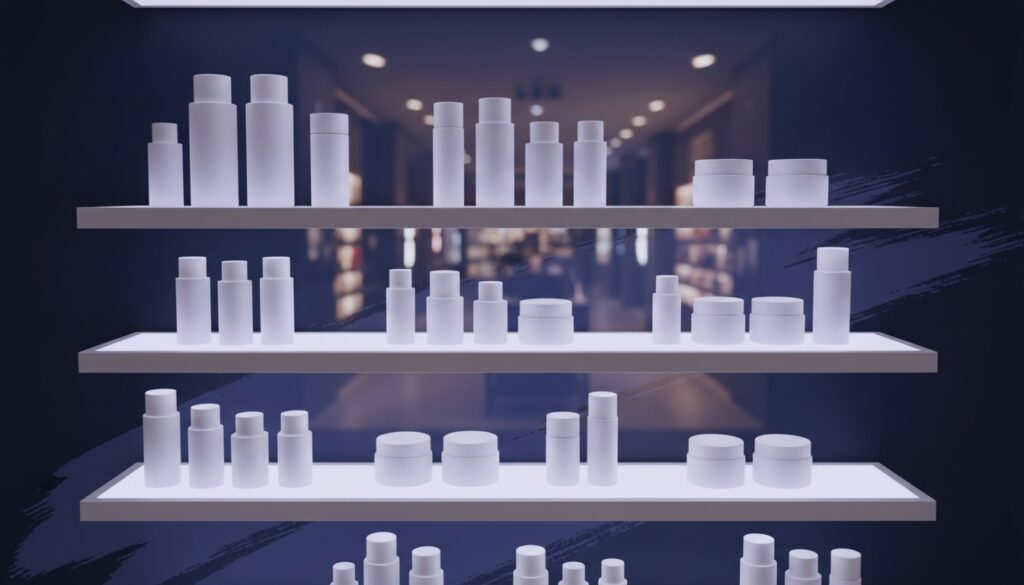
For years, the honest advice to a Korean brand eyeing the U.S. was that the big beauty retailers were effectively closed. Ulta, Sephora, and Target carried a handful of K-beauty names, and the rest fought for attention on Amazon. In 2026 that door is not just open, it is being widened deliberately by the retailers themselves. The shift is real and worth understanding, but it comes with a caution that is easy to miss under the good news: getting on the shelf and staying on it are two different problems.
What the retailers actually did
The expansion is not a rumor. It is a set of concrete moves across all three major channels:
- Ulta expanded its Korean assortment on the Ulta Beauty Marketplace through a K-Beauty World partnership, adding a wave of viral Korean brands and compressing the time from selection to shelf to as little as nine weeks. Its 2026 additions skew heavily K-beauty, with names like Beauty of Joseon, Anua, and Some By Mi in the mix.
- Sephora struck a global partnership with CJ Olive Young to feature the Korean retailer in dedicated zones in stores and online, and separately carries exclusives across Korean skincare and derma lines.
- Target continued building a nationwide K-beauty aisle, adding brands like Haruharu Wonder alongside an established roster including Mediheal, Round Lab, Skin 1004, Ma:nyo, Torriden, and Beauty of Joseon.
Taken together, this is the mass and prestige U.S. retail system actively competing to stock Korean beauty. The scarcity that defined the last few years is easing.
Why the door opened
Retailers do not add categories out of goodwill. They are following demand and defending share. K-beauty is one of the few parts of the beauty floor still growing double digits, and Olive Young’s U.S. arrival gave the incumbents a reason to lock in Korean brands before a dedicated K-beauty retailer could pull that traffic away. The nine-week marketplace onboarding at Ulta is the tell: the bottleneck used to be the retailer’s caution, and now the retailer is engineering speed because it wants the newest Korean products on its virtual shelf before a competitor does. That is a structural change in who is chasing whom.
The operator’s caution: the shelf is the start of the work, not the end
Here is where brands celebrate too early. A retail placement is a demand test with a clock on it. Shelf space is allocated on sell-through, and a Korean brand that lands at Target or on the Ulta Marketplace and cannot support the placement, with reliable supply, compliant documentation, and enough velocity to earn its facings, is quietly delisted at the next reset. Faster onboarding cuts both ways: the same speed that gets you on the shelf gets the next brand on when you underperform. The retailers opened the door because demand is high, which means the competition on the shelf is high too. Winning the placement is a sourcing-and-operations problem as much as a merchandising one: can you keep it in stock, keep it compliant, and keep it moving.
What this means for sourcing
- Source for reorder velocity, not just the launch order. Retail placement rewards consistent replenishment. A supply chain that can refill a fast-selling SKU keeps the facing; one that goes out of stock loses it.
- Have the compliance file retail-ready. Chain retailers demand MoCRA compliance, documentation, and often their own vendor requirements before and during placement. This is table stakes, not paperwork you assemble after the PO.
- Match the channel to the brand. Target’s mass aisle, Ulta’s marketplace speed, and Sephora’s prestige zones are different games with different margin and volume math. Source and price for the specific channel, not for “U.S. retail” in the abstract.
- Plan for the shelf clock. Treat a placement as a velocity test you have a limited window to pass. Line up marketing support and inventory before the reset, not after a slow month.
The operator’s view
The retail door opening is the single most important structural change for K-beauty in the U.S. this year, and it is genuinely good news. But a placement is an opportunity to prove sell-through, not a reward for landing it. The brands that turn a shelf into a franchise are the ones whose sourcing and operations can keep the product in stock, compliant, and moving fast enough to defend the space against the next Korean brand the retailer onboards in nine weeks.
How Luxmetics fits is narrow and practical: we help build the supply reliability, compliance file, and channel-specific sourcing that turn a retail placement into a lasting one, working the Korean manufacturing base so a brand can actually support the shelf it just won. The door is open. Staying inside it is the work.
Want your Korean line on a wider US shelf? Luxmetics runs wholesale distribution into US channels, including MAP monitoring and Amazon Brand Registry and gating. See how our B2B distribution works.