
This is a representative case study — a composite built on real industry benchmarks, not a single named client. Every figure below is drawn from published market data and equipment pricing; the salon itself is illustrative, assembled to show how the economics of a head-spa conversion typically work.
The most profitable square footage in a lot of US salons is the room nobody books. A storage corner, a retired styling station, a treatment room used twice a week. A head spa conversion turns that dead space into a service with a high ticket, low consumables, and a waitlist — and the entry cost is far lower than most owners assume. Here is how the numbers tend to fall.
The demand is real, not a TikTok blip
Start with why the room is worth converting at all. The US scalp-care market is projected to grow from $5.2 billion in 2024 to $8.9 billion by 2033, a 6.5% CAGR (Coherent Market Insights), and the equipment underneath it is growing faster — the head-spa machine category is valued at $1.2 billion in 2025, heading to $2.7 billion by 2034 at an 8.9% CAGR. On the floor, scalp treatments already command a premium: they price at just over $40 on average versus roughly $36 for a typical salon hair service, and full custom scalp facials run far higher — a 60-minute session in Philadelphia is priced at $150 (WHYY). The core buyer is the 25–40 Millennial and Gen Z client who treats scalp care as a wellness ritual, not a chore.
The composite: one room, one basin
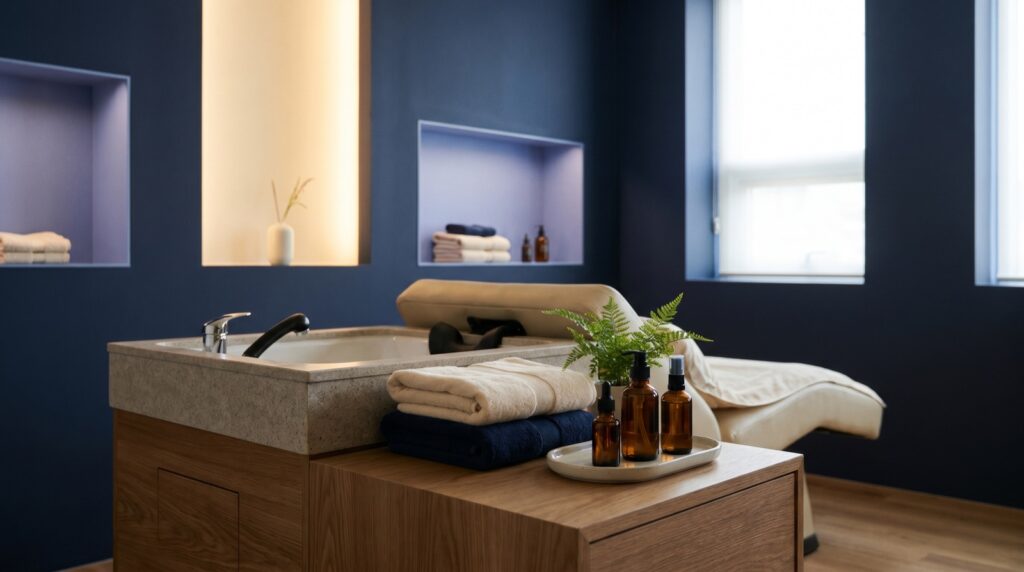
Picture a four-chair salon with a back room used for occasional color processing. The owner converts it into a single dedicated head-spa suite. The build is deliberately modest:
- Equipment: a professional head-spa machine runs $2,000–$3,000; a non-plumbed portable unit can come in under $1,000 for owners who want to test demand before committing to plumbing.
- Training: proper protocol training starts around $1,200 — non-negotiable, because the result is the product.
- Starter products: $300–$500 in scalp serums, exfoliants, and masks.
That puts a complete equipment-and-training installation in the $4,000–$5,000 range (Sakura Head Spa). Add light room finishing — ambient lighting, a comfortable recline, plumbing if the owner skips the portable route — and a realistic all-in for this composite lands in the mid four to high four figures, with a plumbed, fully finished suite pushing toward the high single digits in thousands. The point stands: this is a low five-figure decision at most, not a renovation.
The unit economics
Price the session at $120, squarely inside the observed $90–$130 head-spa range. The honest way to model the ramp is to start slow:
- Month 1–2 (proof): 3 sessions a week. At industry benchmarks, three weekly sessions generate roughly $1,200 a month — about $14,400 a year (My Headspa). On a ~$4,500 installation, that pace alone returns the equipment in a single quarter. Published ROI for this category typically lands at 2 to 5 months.
- Month 3–6 (fill): as the existing client base discovers the service and rebooking kicks in, 6–8 sessions a week is a reasonable target. At 8 sessions × $120, the room clears roughly $3,800–$4,000 a month — from space that previously earned nothing.
Two things make these economics unusually forgiving. First, operating cost is low: consumables, water, electricity, and basic maintenance — the margin per session is high because there is little to subtract. Second, the service pulls retail. Scalp-care clients buy the take-home serum and exfoliant, so a product shelf at the chair adds a second margin stream on top of the treatment ticket.
Where conversions go wrong
The failures are predictable and avoidable. Owners buy the machine and skip the training, then deliver a glorified shampoo and wonder why nobody rebooks — the protocol, not the basin, is what justifies $120. They source the cheapest uncertified equipment and fight breakdowns that kill the calendar. Or they under-price out of nerves, anchoring the service below its perceived value and training their own clients to expect a discount. A head spa is a premium ritual; priced and delivered like one, it holds.
The operator’s view
The reason a head-spa conversion pencils so well is that it does not require new clients or new square footage — it monetizes an asset the salon already owns. The decision is small enough to make on a quarter’s results and reversible enough (a portable unit) to test before committing. For an owner staring at a room that does not earn, that combination is rare.
How Luxmetics supports this is end to end: we source the basin and device hardware directly from Korean manufacturers, pair it with the protocol training that makes the ticket defensible, and supply the scalp-care product line that turns each session into a retail attach. We also help model the specific room before any equipment is bought, so the conversion is a planned investment with a known payback — not a hopeful purchase. The whitespace is the room you are already paying rent on. The conversion just makes it pay you back.