
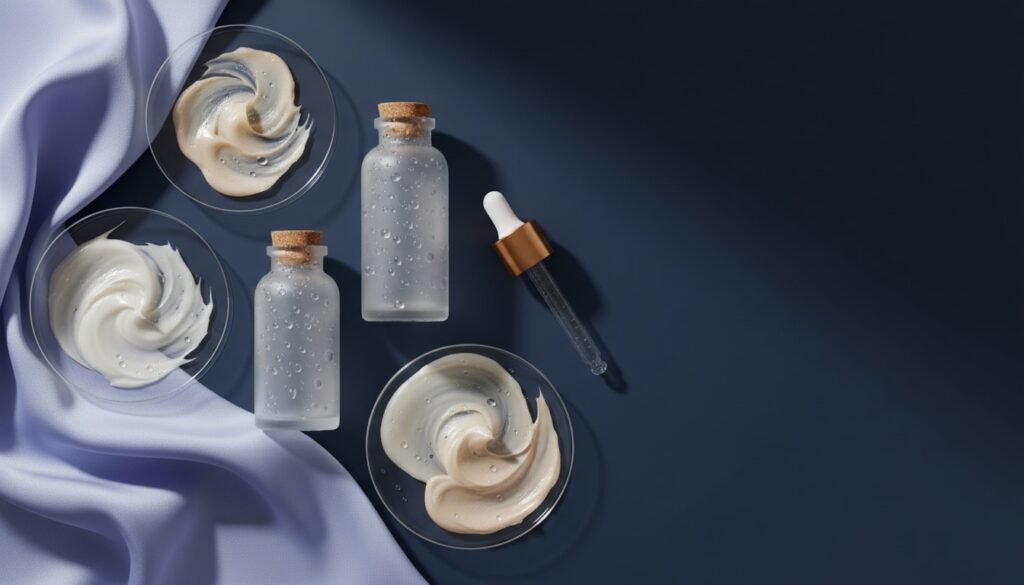
The last five years of K-beauty were an ingredient arms race. Snail mucin, then PDRN, then peptides, then exosomes, each one a hero molecule that carried a season. In 2026 the frame is shifting from a single hero to an ecosystem. The fastest-moving story in Korean skincare right now is the skin microbiome, and the products winning shelf space are the ones built around postbiotics and fermented actives rather than one buzzword on the front of the box. For a U.S. importer, this is a trend worth understanding before your competitors’ assortments fill with “barrier” and “biotic” claims you cannot substantiate.
What the microbiome shift actually is
The skin hosts a living community of microorganisms, and a growing body of formulation science treats that community, not just the skin cells, as the thing a product should support. The category splits into a few tiers worth keeping straight. Probiotics refer to live or inactivated bacterial cultures. Prebiotics are the nutrients that feed a healthy microbial balance. Postbiotics are the beneficial byproducts of fermentation, compounds such as amino acids, peptides, organic acids, and antioxidants that deliver benefits without containing live organisms. For a shelf-stable, export-friendly product, postbiotics and fermented ingredients are the practical center of gravity, because they carry the barrier and hydration benefits without the stability and regulatory complications of keeping live cultures alive in a bottle.
Korea has a structural head start here. Fermentation has been part of Korean skincare for decades, and ingredients like Galactomyces ferment filtrate and Bifida ferment lysate have long, proven track records in formulations used by millions of consumers. The microbiome trend is not asking Korean labs to invent a new capability. It is asking the U.S. market to catch up to one Korea already has.
Why it is breaking out now
The numbers behind the shift are not small. The broader microbiome cosmetics market is measured in the tens of billions of dollars and is forecast to compound at roughly 15 percent a year into the next decade. Consumer awareness has moved just as fast. By 2025, well over 60 percent of skincare consumers recognized microbiome-friendly formulations, up from under 40 percent five years earlier, and nearly half of global cosmetic brands had launched at least one microbiome-focused line. Asia-Pacific, led by K-beauty, is the largest consumer market for fermented skincare.
On the Korean side, the brands defining the category are already familiar names to U.S. buyers. Anua built momentum on heartleaf calming, Mixsoon and TOCOBO have made Bifida ferment lysate a hero across full lines, and hanbang-rooted houses like Beauty of Joseon lean on rice-water ferment and propolis. The through-line is that “barrier repair” and “microbiome-friendly” have moved from a marketing garnish to the organizing idea of entire ranges.
The operator’s caution: this is a claims minefield
The commercial appeal is obvious. Microbiome language sounds scientific, premium, and gentle, which is exactly what the U.S. barrier-repair consumer wants to hear. But that same language is where the trend gets an importer into trouble. In the United States, a cosmetic is legally defined by cleansing and beautifying. The moment a label starts implying that a product treats a condition, restores a biological system, or acts like a probiotic drug, a regulator can reasonably ask whether it is still a cosmetic at all. “Probiotic” on a face cream is not a free word. Words like “heals,” “repairs the barrier” as a therapeutic claim, or anything suggesting the product alters the body’s microbial biology can pull a product toward the drug lane. The physical product is usually fine. The copy is where the risk lives.
What this means for sourcing
- Favor postbiotics and ferments over live cultures. Fermented and postbiotic formulations carry the benefit story while staying shelf-stable and far simpler to import than anything relying on live organisms surviving in the bottle.
- Buy the substantiation, not just the buzzword. “Microbiome-friendly” means something only if there is testing behind it. Ask for the barrier-function and irritation data, and the evidence supporting any calming or hydration claim, before it goes on a U.S. label.
- Keep the claim cosmetic. Market the outcome, which is calmer, more hydrated, more resilient-feeling skin, not the biological mechanism. Avoid “probiotic,” “heals,” and any implication the product treats a condition or alters the microbiome.
- Lean on Korea’s proven ferment bench. Galactomyces and Bifida have decades of use behind them. Sourcing from that established base is a lower-risk entry into the trend than chasing a novel strain with a thin safety file.
The operator’s view
The microbiome shift is a real reframing of how skincare is built, not a texture gimmick, and Korea is positioned better than anyone to supply it. The problem it addresses, a compromised barrier and reactive, over-stripped skin, is genuine and widespread in the U.S. consumer base. But the winners in this category will not be whoever slaps “microbiome” on the most SKUs fastest. They will be the operators who source proven fermented actives, hold real substantiation, and keep the claim language on the cosmetic side of a line that a live-culture buzzword can very easily cross.
How Luxmetics fits is narrow and practical: we work the Korean manufacturing base where fermented and postbiotic skincare originates, qualify the actives and their substantiation before you commit inventory, and pressure-test claim language against U.S. rules so a premium barrier story does not turn into a drug-classification problem. The science is worth importing. The discipline around the claim is what makes it a business.