
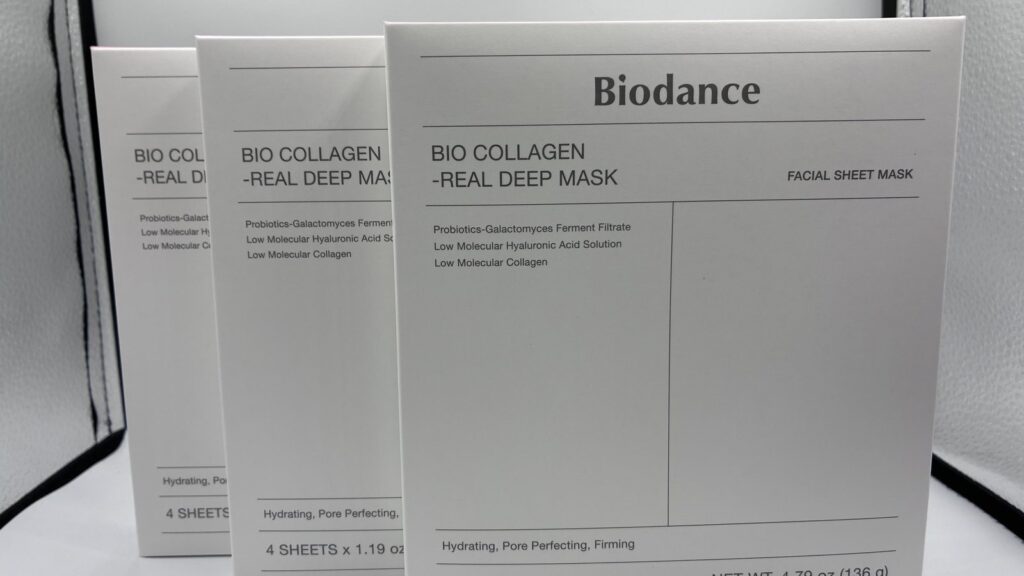
Nineteen dollars for four sheets. That is the price Biodance lists on its own site for the Bio Collagen Real Deep Mask, and the brand reports the same product as the best-selling mask on Sephora US online as of September 2025, with Costco and Amazon listings alongside. A spa owner reading that arrives at the margin question before the ingredient list, because the client can check the number on their phone before the mask has finished turning transparent. The Biodance Bio Collagen mask is the clearest current example of a product that is famous before it reaches the spa shelf, and famous products need a different plan from the rest of the assortment.
From an Olive Young shelf to 205 end-caps
The distribution facts, all brand-reported: Biodance launched at Sephora US in February 2025. By September 2025 the brand was reporting the Bio Collagen Real Deep Mask as the best-selling mask on Sephora US online. Costco and Amazon US listings followed, and from March 2026 the brand reports branded end-caps in 205 US Sephora stores. The brand also claims more than 300 million masks sold worldwide. Whatever the figures look like from the outside, the shape is unambiguous: a product Korean shoppers knew from Olive Young shelves moved into US prestige, club and marketplace channels inside a little more than a year.
For a spa, that ubiquity is not a problem to solve. It is a condition to plan around, and the plan starts with reading the box the same way a client will.
Reading the box of a Biodance Bio Collagen mask
The pale grey box says FACIAL SHEET MASK and lists three components: Probiotics-Galactomyces Ferment Filtrate, Low Molecular Hyaluronic Acid Solution, Low Molecular Collagen. The claim line reads “Hydrating, Pore Perfecting, Firming”. The quantity line reads 4 SHEETS x 1.19 oz (34 g), NET WT. 4.79 oz (136 g). The brand describes the sheet as a hydrogel of solidified essence, designed to be worn for hours or overnight until it turns transparent.
Every one of those phrases is available to the team, as printed. Hydrating, Pore Perfecting and Firming are appearance words chosen by the brand, and the team says the box reads that way. Nobody upgrades those words into a statement about what the skin will do. The ingredient names are read as names. Low molecular is a description the brand applies to its own materials, and the team leaves it at that. A product this visible gets quoted back to the spa by clients who have read the reviews, so the safest sentence is always the one on the pack, and the second safest is a question about what the client has already tried.
The treatment-room role of a long-wear sheet
A hydrogel designed to be worn for hours does not fit a service the way a fifteen-minute sheet does, and forcing it into a slot mid-facial wastes what it was built for. The role that works is at the end. The esthetician applies the sheet as the closing step, explains that it is designed to be worn until it clears, and sends the client home wearing it or carrying the remaining sheets. The room has provided the first use, the instruction and the context, which is the one thing Sephora and Costco cannot ship. The moment a client first watches the sheet turn transparent is the moment they associate with the spa, not with the end-cap.
The sampling role follows from the same logic, with one rule. A retail 4-pack is never opened to sample from. Once the box is open it is no longer sellable, and the spa has converted margin into a giveaway without deciding to. Sampling and closing-step use come from back-bar stock, ordered on its own line, counted on its own line. The retail box stays sealed until it is paid for.
Price integrity when the client already knows the number
The brand’s own site lists the 4-pack at USD 19. A spa that prints a higher figure for the Biodance Bio Collagen mask is inviting a phone check and a small loss of trust that costs more than the difference. A spa that prints a lower figure is discounting a product it did not need to discount and training clients to expect it. The defensible position is to hold the brand’s price and let the margin come from where a spa’s margin has always come from: the service the mask closes, the retention the ritual supports, and the reorder that happens at the desk rather than online.
This is also where the two-jar discipline from earlier in this series applies. Back-bar sheets are a cost of the service and are priced into it. Retail packs are sold at the brand’s number. Neither subsidizes the other, and neither is used to explain the other to a client.
Hydro Cera-nol, the second answer inside one family
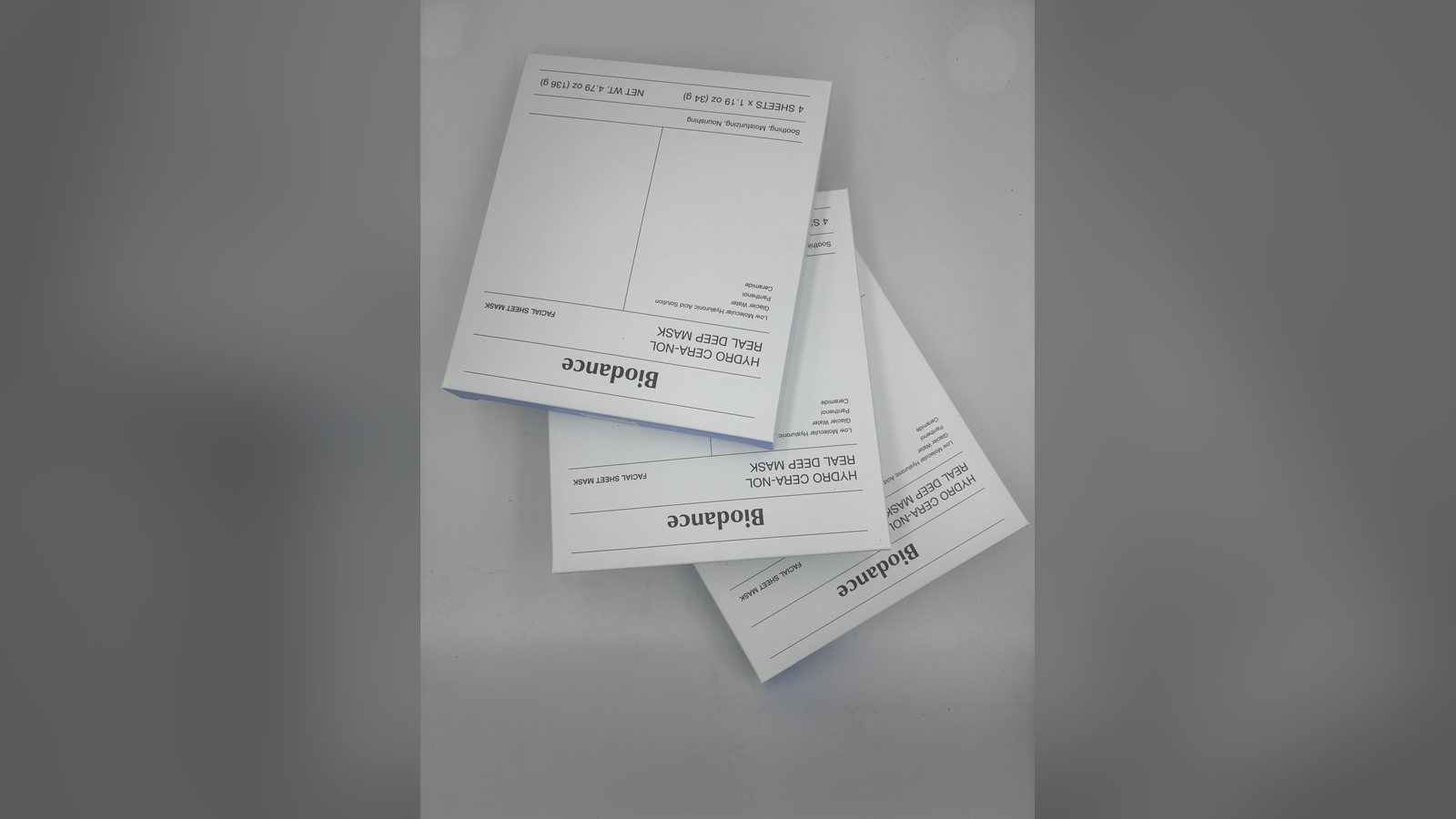
The same shipment carries loose sachets of the Biodance Hydro Cera-nol Real Deep Mask, the ceramide-led variant in the same Real Deep Mask family. We do not assert its ingredient list here, because we are working from photographs of the sachets rather than the box. What we can say is structural. When the hero SKU is on an end-cap the client has already walked past, the sibling is what gives the consultation something to say that the end-cap does not say for it. The team can present the family as a family, place the Bio Collagen sheet as the one the client already knows and the Hydro Cera-nol as the one chosen for them at the table, and let that choice be the value the spa adds. A famous product brings the client to the conversation. The second product is what the conversation is for.
Ordering a bestseller without fighting it
On a SKU like this, Luxmetics sources both variants of the family, writes back-bar and retail as separate lines, checks the pack labeling on intake against US requirements, books the freight, and supplies a team card that carries the box copy and the pricing position. The mask arrives with its role decided, so the shelf does not end up competing with a store the client visited last week.