
Sunday, October 18, is World Menopause Day. The International Menopause Society has marked it since 2009, and its 2026 theme is “Chronic Pain at Midlife.” That theme belongs to physicians and researchers. For a spa, the day is a useful prompt to look at something closer to home: how your team listens when a midlife client sits down and says her skin does not feel the way it used to.
This article stays in cosmetic territory. It covers the consultation, the words a spa team can use about skincare, and the point where a client should see a physician instead. It makes no claims about hormones or health.
A day about midlife, kept in the right lane
A midlife client may bring a mix of concerns to the treatment room. Some are about how skin looks and feels: drier, tighter, duller, less comfortable with products she used for years. Others are medical: pain, sudden changes, sleep, or questions about hormones and medication. The first group is the spa’s work. The second belongs with a physician.
The kindest thing an esthetician can do is make that split early and clearly. A client who hears “that sounds like something to raise with your doctor” from someone she trusts is more likely to go. It also protects the spa. An esthetician who offers medical opinions is working outside a state license, however good the intention.
The day itself can be marked quietly. A spa might set aside consultation time that week, refresh the team on the referral script, or share a short note with clients about skin comfort in cooler months. Avoid promotions that tie a product to menopause itself. A discount framed around a life stage invites clients to read a medical promise into a cosmetic product, and it can also feel presumptuous to the person reading it.
A short script helps the whole team say the same thing:
- “I can help with how your skin feels and looks. For anything about pain, hormones or medication, your physician is the right person.”
- “If a spot, rash or irritation is new or changing, please have a doctor look at it before we treat that area.”
How the consultation listens
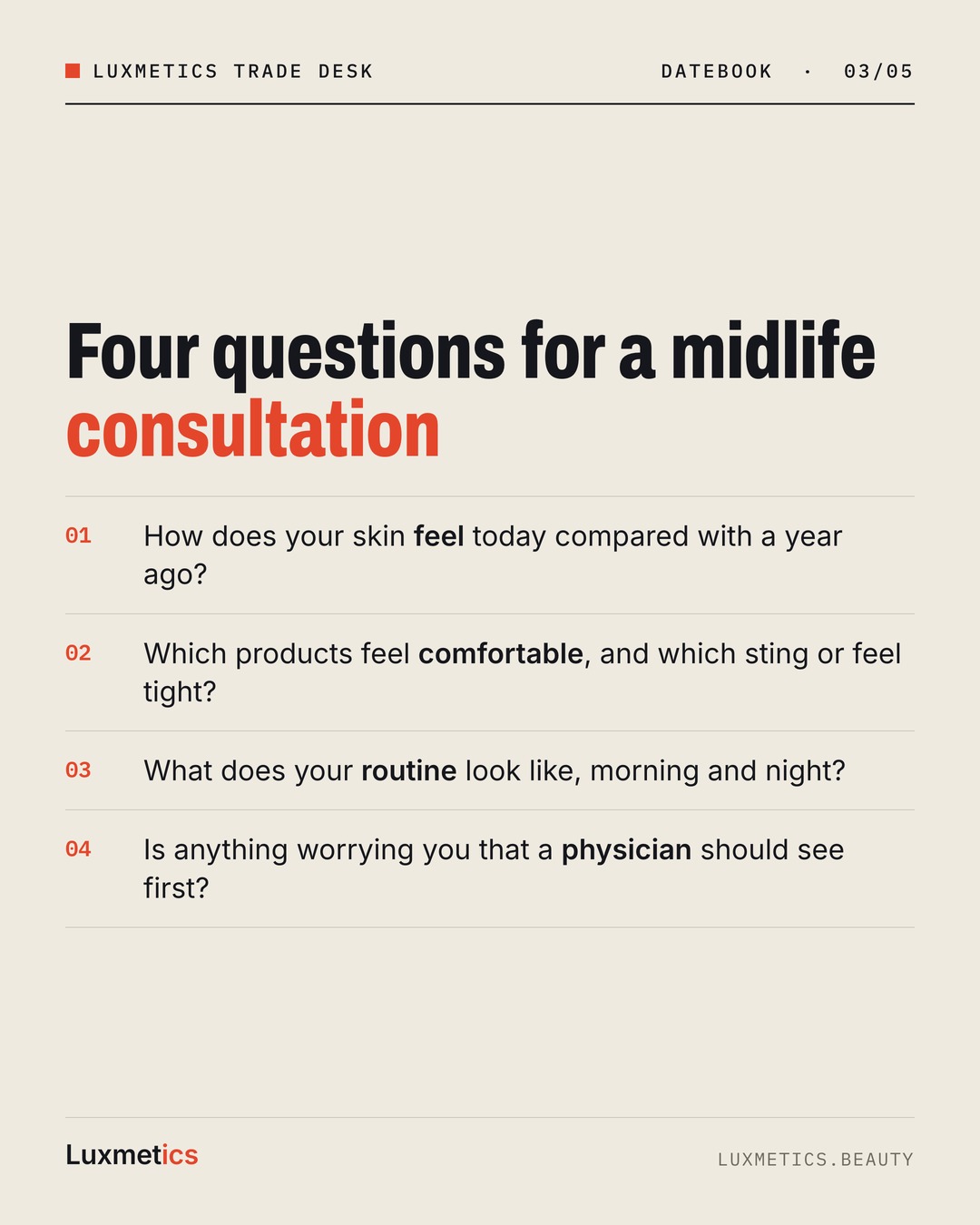
Korean skin analysis starts with observation and conversation before any product is chosen. For midlife clients, that order matters. Four open questions do most of the work:
- How does your skin feel today compared with a year ago? This invites a comparison in her own words instead of a checklist.
- Which products feel comfortable, and which ones sting or feel tight? Discomfort with a long-used product is useful information for the esthetician.
- What does your routine look like, morning and night? Some midlife routines are built around products chosen years earlier.
- Is anything worrying you that a physician should see first? Asking directly gives her permission to say so.
Then look. Check hydration, texture and sensitivity by touch and under good light. Write down what you see in plain terms, so the next visit can compare against it. A consultation card that records “cheeks feel tight after cleansing” is more useful than one that says “mature skin.”
Record the answers in the same order at every visit. When the consultation card follows a fixed sequence, a different esthetician can pick up the thread next time, and the client does not have to explain herself again. For a midlife client who may already feel unheard elsewhere, that continuity is part of the service.
Language matters too. Some clients dislike “anti-aging” and “mature.” Describe the skin as it is today: dry, tight, dull, uneven in texture. Describe the goal the same way: more comfortable, smoother looking, better hydrated.
Keeping product talk cosmetic
Once the consultation is done, the recommendation should use cosmetic language only. The words that fit are about feel and appearance.
- Words to use: hydrating, moisturizing, comforting, softening, smoother looking, supports the skin barrier, helps skin feel less tight.
- Words to avoid: treats, heals, repairs, balances hormones, reverses, prevents, cures, or anything that describes an effect inside the body.
Korean skincare suits this conversation well because so much of it is built around hydration and a comfortable barrier. Layered hydration, gentle cleansing, sheet or hydrogel masks in the treatment room, and a simple take-home routine give a midlife client something she can feel the same day, without any medical promise attached.
Keep the take-home short. Three steps a client will actually do at home beat seven she will abandon in a week. Book the follow-up before she leaves, and at that visit, ask the first question again: how does your skin feel now?
Finally, keep a referral habit as well as a referral script. If a client mentions something medical at any visit, note it and ask about it next time. Clients remember the esthetician who remembered.
Stocking for the midlife consultation
Luxmetics trains US spa teams in Korean skin analysis, consultation scripts and barrier-first home-care routines, with language written to stay cosmetic and inside each state’s scope. We source Korean hydration and barrier-care products for treatment rooms and retail, and check US labels and MoCRA listings before they ship. Your team leads the consultation and makes the call on when to refer. We help them do it the same way in every room.