
Most beauty categories in the U.S. are a fight for share in a market that is already saturated. Men’s skincare is the rare exception: a large category that is still mostly empty. Only about a third of American men keep a regular skincare routine, against nearly two-thirds of women, and the gap is closing fast as Gen Z men adopt at rates that look nothing like their fathers. For a U.S. operator sourcing from Korea, this is one of the clearest structural growth stories in beauty, and Korea happens to make exactly the kind of product that converts a skeptical first-time male buyer.
The size of the empty room
The men’s skincare market was worth roughly US$19 billion in 2026 and is forecast to grow at about 10 percent a year toward the low fifties of billions over the next decade. The broader men’s grooming market is larger still. But the number that matters for an operator is not the size, it is the under-penetration. When only 29 percent of men have a routine versus 62 percent of women, the growth is not a battle for switchers. It is a first-time-buyer market, and first-time buyers behave differently from category veterans. They want simple, they want low-risk, and they want to be told exactly what to do.
Why Korea fits the male first-timer
The reason K-beauty is over-indexed to convert this buyer is the product format itself. K-beauty exports have helped normalize lightweight textures and daily-use formats, and interest in Korean and Japanese products among men has been rising sharply. That matters because the single biggest barrier for a male first-timer is the fear that skincare is complicated, greasy, or feminine-coded. A light, fast-absorbing Korean moisturizer and a simple cleanser answer all three objections at once. The entry routine is short, the textures do not feel heavy, and the results are visible enough to build a habit. Korea has spent years optimizing for exactly the low-friction experience that pulls a hesitant beginner across the line.
The operator’s caution: this is a positioning problem, not a formula problem
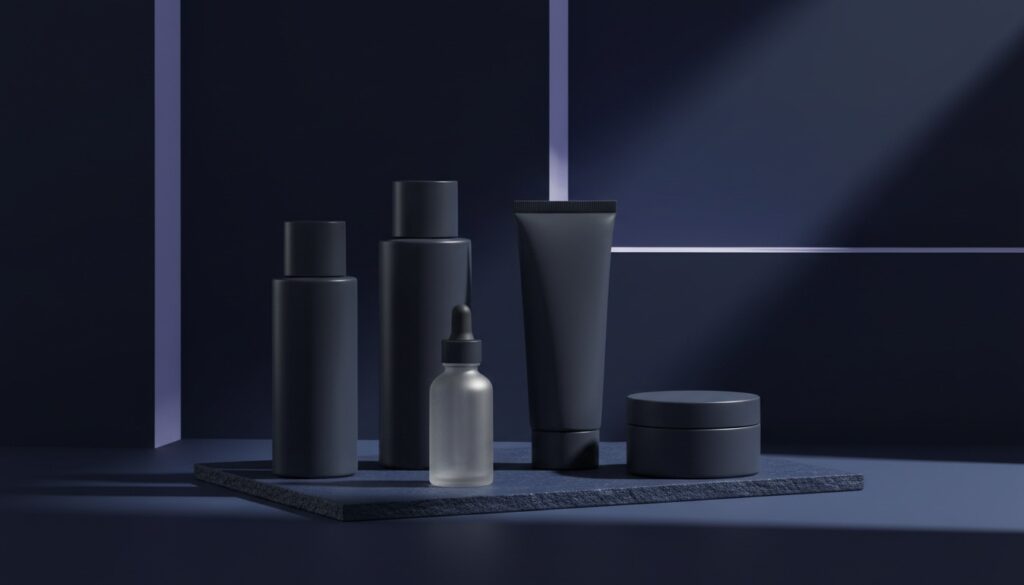
Here is the trap. The instinct with men’s skincare is to build a separate “men’s line,” which usually means the same formulas in dark packaging with a sportier name and a price premium that is hard to justify. That can work, but it is not where the sourcing leverage is. The male first-timer is won on simplicity and guidance, not on gendered branding. A tightly curated three-step routine with clear instructions converts better than a twelve-SKU wall that recreates the exact overwhelm the buyer was avoiding. The sourcing decision that follows is to build a short, sequenced starter set rather than a broad line, and to let the formats do the reassuring rather than the packaging. The compliance rules do not change because the customer is male; the same MoCRA and claims discipline applies.
What this means for sourcing
- Source for the starter routine, not the full line. A cleanser, a light moisturizer, and one hero treatment beat a sprawling assortment for a first-time-buyer market. Curate for simplicity and sequence the steps.
- Let texture carry the conversion. Lightweight, fast-absorbing, non-greasy formats are Korea’s strength and the male beginner’s number-one requirement. Prioritize feel in the samples you qualify.
- Do not over-charge for gendered packaging. The premium has to buy something real. Guidance, quality, and format justify price. A darker bottle does not.
- Keep the claims clean. A new-to-category buyer is more sensitive to overpromising, and the regulatory rules are identical. Market visible, believable outcomes, not clinical claims.
The operator’s view
Men’s skincare is not a trend riding a moment. It is a large, structurally under-penetrated category being adopted by a younger generation for whom the old stigma has already faded, and it is one of the few places in U.S. beauty where the room is still filling rather than fought over. Korea makes the product that converts the buyer at the center of it: simple, light, low-risk. The operators who win will source for the first-timer’s actual needs, a short guided routine in formats that do not feel like a chore, rather than building another men’s line nobody asked for.
How Luxmetics fits is narrow and practical: we work the Korean manufacturing base that has spent years perfecting the lightweight formats this buyer responds to, help curate a tight starter routine instead of an unfocused line, and keep the sourcing and compliance disciplined so a growth category does not become a cluttered shelf. The room is still empty. Sourcing the right three products is how you fill it.