
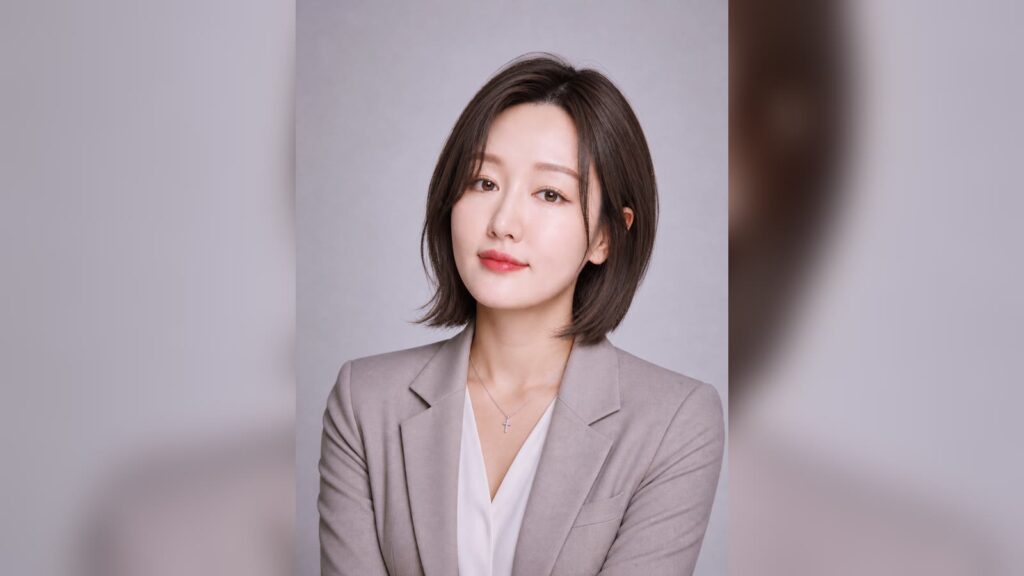
For our first Insights interview, we sat down with Han Hyemi, a Seoul-based makeup artist with more than 200,000 followers and fifteen years at the chair. The conversation was conducted in Korean and has been translated and lightly condensed for clarity.
Most conversations about K-beauty happen at the level of products, exports, and trend cycles. This one happens at the level of the chair — what a working Korean makeup artist actually sees, client by client, as the industry she helped build goes global. Han Hyemi works out of a salon attached to a Seoul hotel near Parnas Mall and COEX, which has given her an unusually clear view of one thing in particular: the foreign client is no longer the exception.
From “making people beautiful” to “helping them see themselves”
We opened by asking which is closer to her work now — making someone more beautiful, or helping them recognize their own beauty.
“I used to lean on the first,” she said. “Now I work more from the second. Beyond doing the makeup myself, I try to think about a person’s beautiful points and help them learn to see those for themselves.” In practice that means education as much as application: “It starts with finding the colors that suit you — warm tone, cool tone — and matching the outfit, the hair color, the blush and lip to that. Even base products now are split by skin type — oily, dry, sensitive — so I recommend a base suited to the person and build the look around it. Both parts matter, but helping people learn it for themselves has become just as important.”
The work is confidence, not cosmetics
Ask for a story and the metric she reaches for isn’t a look — it’s a life. “One client had been too busy with work and family to wear makeup, and she had a lot of worries about it. She signed up for a class and brought in her own makeup pouch, so I could recommend what to repurchase. She came all the way from Cheonan to Gangnam — a big step. Afterward she messaged me to say she’d found her confidence again, that her husband told her she looked prettier. That kind of feedback makes me happy too.”
The dramatic transformations are real, she says — “just by doing makeup, someone who felt subdued becomes brighter, livelier. With event or photo or party makeup, the before-and-after is obvious even from across the room” — but the through-line is the client’s reaction, not the artist’s.
Knowing when not to add
One answer stood out for what it says about craft. We asked whether there’s ever a feature she tells clients they don’t need to cover.
“Some clients already have very defined features — eyes, nose, lips, even the brows — a kind of finished look,” she said. “For them, a thin layer of sunscreen and just the brows and lips can be enough; adding heavy color can actually make it worse. So I’ll recommend doing less, even taking things off, and complete a truly natural look. If they really want a bold look, I’ll do it — but when natural suits them, I won’t push the heavy version.” Restraint as a service, not an upsell — a useful instinct for anyone building a beauty business on trust.
The foreign client is now the trend, not the exception
Because her chair sits inside a hotel, Hyemi feels the K-beauty boom as foot traffic, not as a market-research line. “I felt it especially after COVID,” she said. “There was a buzz before, it dipped during, and then it surged. We get clients from China — some coming for surgery — and many other countries; some even speak a little Korean. The salon is attached to a hotel, near Parnas Mall and COEX, so a lot of foreign guests come in — for scalp and head-spa treatments, and increasingly for makeup.”
Her read on the cause is exactly the flywheel operators talk about: “K-beauty is really reaching outward now — K-drama, cosmetics, the whole sector — and you feel it firsthand. In the busy areas, Myeongdong, Seongsu, there are so many foreign visitors.” And it changes what she thinks the business needs to do next: “Whether it’s a hair product or a makeup product, I feel we really need to communicate and promote — even on my own beauty Instagram, where a lot of the engagement now comes from people abroad.” Personal-color consultations, head-spa, and makeup education aren’t separate services to this clientele; they’re the reason for the visit.
The reward, in one word
We asked her to name the feeling she chases — the “aha” moment — in a single word. She didn’t hesitate: “Joy. Or happiness. When I complete a look and the feedback comes back that everyone around them reacted well, that they carried their event with joy and want to try something new next time — I feel that joy right along with them.”
It extends to the hard clients, too. “Complaints happen. It can be flustering, but the goal is always to finish the look and send the client off satisfied. I check in along the way — is this direction working? — and adjust as I go, so 80 to 90 percent of the time there’s no issue. Occasionally someone seems fine and then says no at the end. When that happens I apologize and re-adjust until we reach something we’re both happy with. Complaints can’t be avoided entirely — they’re part of the process, and handling them well is part of the craft. That’s how you grow.”
“Beauty is completion”
We closed by asking her to compress fifteen years into one line anyone could remember. Her answer doubles as a service philosophy:
“Beauty is completion. Beauty can be the completion of everything. The confidence you want gets completed through makeup or hair — it’s the completion of an occasion, or of the self you want to be.”
The operator’s view
It’s easy to read an artist interview as soft content. We read it as field research. Three things Hyemi describes are, in fact, the operating thesis of a modern K-beauty business: education and personal color are the product (clients increasingly pay to learn their own faces, not just to be made up); the inbound foreign client is a standing channel, not a seasonal spike, especially anywhere near hotels, head-spa, and the districts tourists actually walk; and restraint builds the brand — the artist who talks a client out of heavy makeup is the artist they trust with everything else.
That is the gap Luxmetics works in. We help salons and operators open head-spa and aesthetic studios, source the Korean products and devices behind the chair, and build the education and certification programs that turn “a makeup service” into “a reason to come back.” Han Hyemi’s view from the chair is the same one we build businesses around: beauty, done right, is completion — and completion is a service you can scale.