
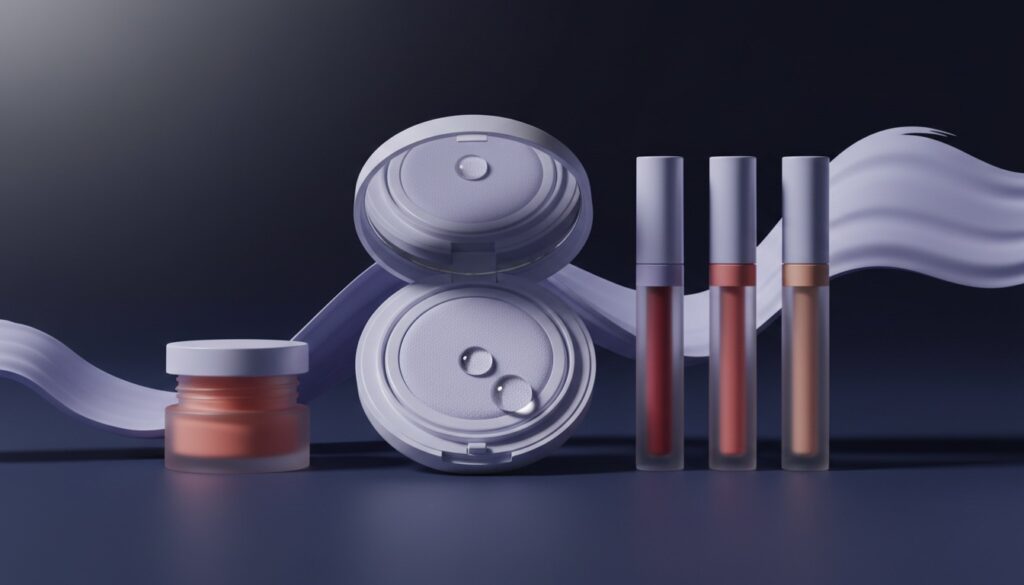
K-beauty conquered the U.S. on skincare. The next front is the makeup bag. For years, Korean color cosmetics were a niche inside a niche, the cushion compact a curiosity that traveled with the skincare routine but never led it. In 2026 that is changing, and the reason is that American makeup taste has quietly moved toward exactly what Korea has always made best: light, dewy, skin-first color that enhances rather than conceals. For a U.S. importer, color is the fastest-growing adjacency to a skincare program, and it comes with a different sourcing problem than serums.
What the numbers say
The category is not a hunch, it is a measurable acceleration. Color cosmetics overall are forecast to grow at roughly 12 percent a year through the early 2030s, and the specific slice Korea owns is growing faster than the average. The K-beauty dewy-finish pigment systems market, essentially the technology behind skin tints and cushions, is valued at about US$520 million in 2026 and is projected to nearly triple over the following decade. The U.S. market for these products is expanding on the back of Sephora and Ulta shelf access and online discovery. And the broader 2026 mood in makeup, a rebound led by lightweight cushion foundations, lip tints, and cream blushes that enhance the skin rather than mask it, describes Korean color cosmetics almost exactly.
Why the door opened now
Two shifts met. The first is aesthetic: after years of heavy, full-coverage, matte “Instagram makeup,” the American consumer moved toward a skin-first look, glowy, natural, “your skin but better.” That is the look Korean color cosmetics were built around, and the cushion compact, the skin tint, and the gradient lip tint are the native formats for it. The second is access. The same retail expansion we have been tracking, Ulta, Sephora, and Target widening their Korean assortments, is now pulling color through the door that skincare opened. The consumer who bought the Korean essence at Ulta is one aisle away from the Korean cushion, and the retailer is increasingly stocking both.
The operator’s caution: color is a harder sourcing problem than skincare
Here is where importers who succeeded with skincare get humbled. Color cosmetics carry sourcing complexities a serum does not:
The first is shade range. A cushion or skin tint that ships in Korea with a narrow, fair-leaning shade range is a non-starter on a U.S. shelf, where an inclusive range across deep and warm tones is table stakes and increasingly a matter of retailer requirement and public scrutiny. Sourcing color means sourcing a shade range built for the U.S. consumer, which is a real formulation and inventory commitment, not a translation.
The second is color-additive regulation. The U.S. regulates cosmetic colorants tightly through an approved list, and pigments permitted in Korea are not automatically permitted in the U.S., with additional restrictions for products used near the eye. A Korean color formula has to be checked against U.S. color-additive rules before it can be sold, and this is a category-specific compliance layer that skincare importers have never had to think about. The third is the ordinary K-beauty discipline still applying: MoCRA, claims, shelf life. Color simply adds shade and colorant on top.
What this means for sourcing
- Source the shade range, not just the formula. A U.S.-appropriate, inclusive shade range is the entry ticket. A narrow Korean range does not transfer, and building the range is a real commitment to qualify up front.
- Vet every pigment against U.S. color-additive rules. Colorants approved in Korea are not automatically U.S.-legal, and eye-area products face extra restrictions. This is a category-specific compliance check skincare never required.
- Lead with the formats Korea owns. Cushions, skin tints, and gradient lip tints are the native strengths and match the U.S. skin-first mood. That is where the sourcing advantage is clearest.
- Let color ride the skincare shelf. The retail access skincare opened is pulling color through. Sequencing color as an adjacency to an established skincare placement is easier than launching it cold.
The operator’s view
Color is the natural next category for a Korean-beauty program because American makeup taste finally moved to meet Korea’s strengths, and the retail door skincare opened is pulling color through it. But it is a genuinely harder sourcing problem than skincare, with shade range and U.S. color-additive rules as new, non-negotiable layers. The winners will treat color as its own discipline, sourcing a U.S.-ready shade range and U.S.-legal pigments, rather than assuming the skincare playbook simply extends to the cushion.
How Luxmetics fits is narrow and practical: we work the Korean color-cosmetics manufacturing base, qualify shade ranges built for the U.S. consumer, and check pigment formulas against U.S. color-additive regulation before you commit, so a cushion or tint clears the category-specific hurdles skincare never had. The makeup bag is the next front. Sourcing it as its own problem is how you win it.